The Wilderness of Canada - Part 1: Alberta.
Canada has plenty to offer. From pristine landscapes coated in snow to jaw-dropping glacial lakes. My love for Canada began during my first trip in October 2016 to Alberta. Exploring Banff National Park, seeing the sheer size of the mountains; I will never forget the first drive into the Canadian Rockies, the constant thoughts of amazement swirling through my brain as the landscape completely changed from flat plains to being surrounded by jagged ice-capped peaks. It was more than I ever imagined. I have traveled here six times now, and always yearn to return before the current trips even ended.
Each year I station myself in Canmore, a mountain town close to Banff. Canmore is grossly overlooked yet has many beautiful hiking routes with out of this world scenery. The Three Sisters is one of the big highlights, especially at sunrise.
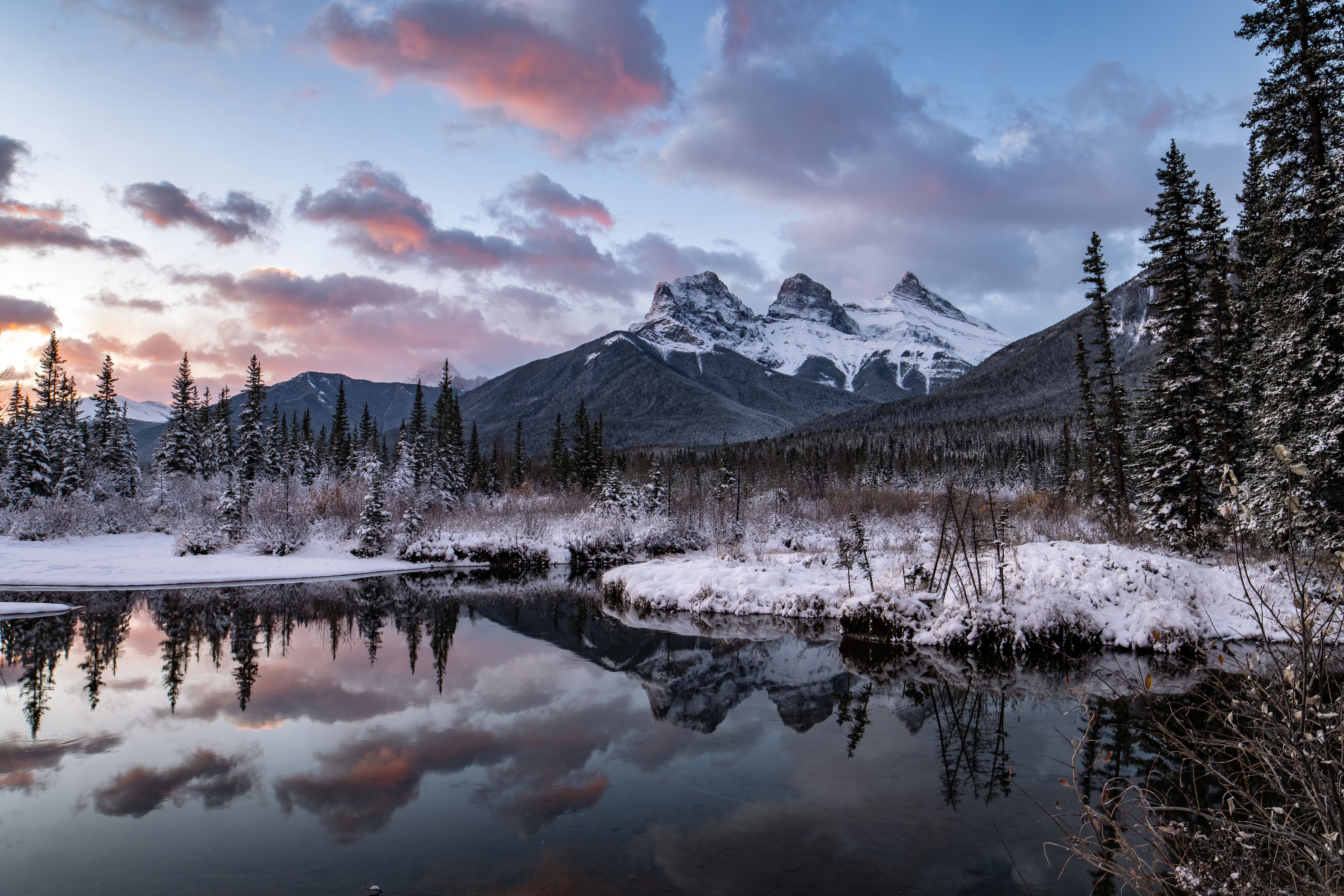 The sunrise at the Three Sisters mountain in Canmore, Alberta.
I ventured here on my most recent trip knowing the exact composition I wanted of the mountains. I was blessed the night before my sunrise trip with a flurry of snow making the excitement in me ever so more. The conditions looked spectacular. I stood for hours getting shots of the sunrise illuminating the sky before moving to spots to capture images of often overlooked aspects of the area and was so thrilled with the results.
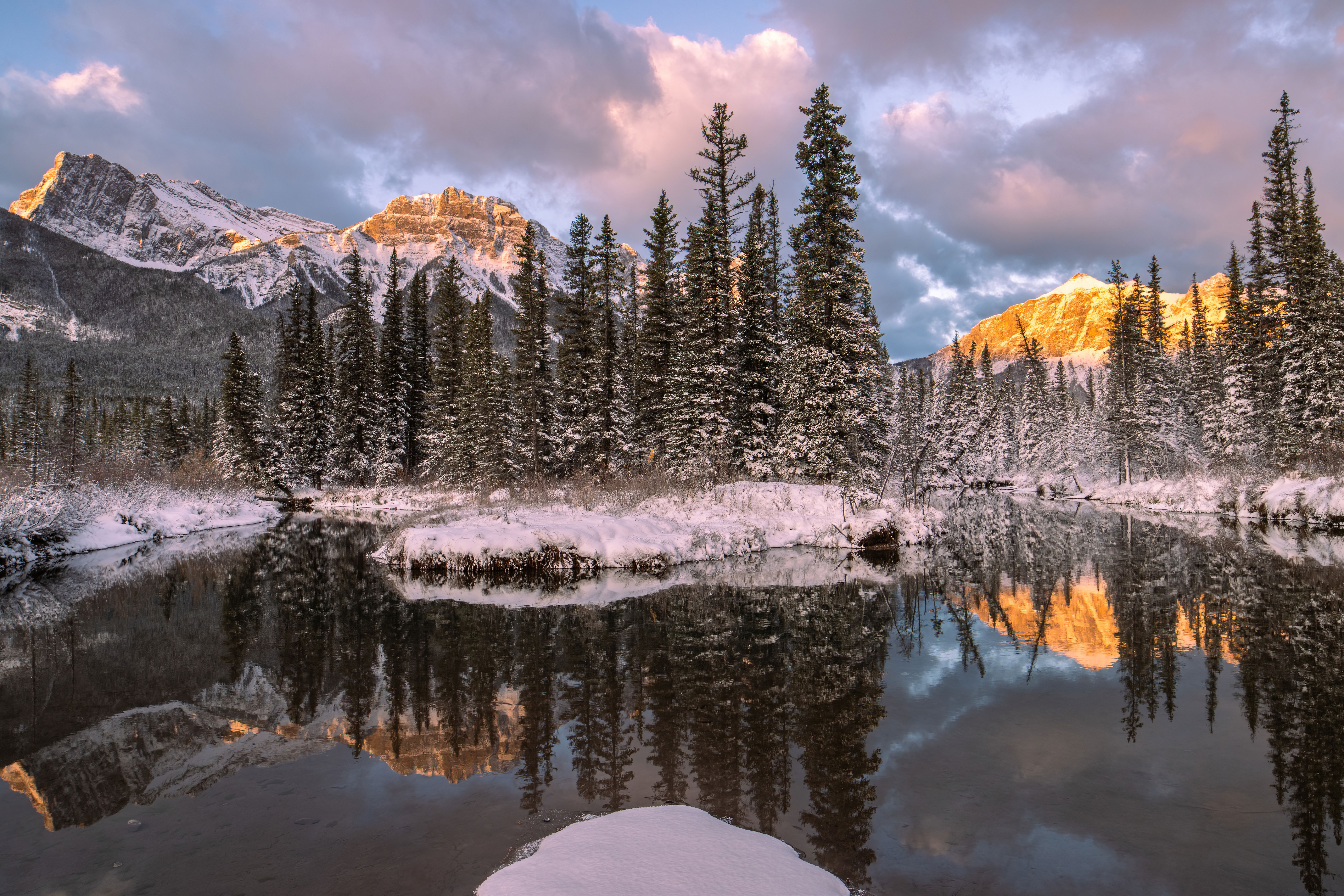 The mountain peaks illuminated with the first light of the morning sunrise.
Walking downstream I approached this viewpoint of an island, encompassed with the array of colours in the sky. The water was extremely still, giving me the crisp reflection I desired.
Traveling around Canada will never be tiresome with so many unique landscapes. Banff National Park has many famous lakes such as Moraine Lake and Lake Louise. The latter is famed for its superior beauty with striking blue water. Its popularity also lies with the ski resort, which is one of the largest in North America. The lake itself freezes over in the winter and allows people to ice skate in front of the Fairmont hotel. During the summer the iconic red canoes come out, which is ideal for that special core memory day activity, deep in the Canadian Rocky Mountains. I love getting different compositions of Lake Louise, but getting this cabin in seems to really add that unique aspect. A long exposure meant the lake was completely still and glassy, showcasing the turquoise colour.
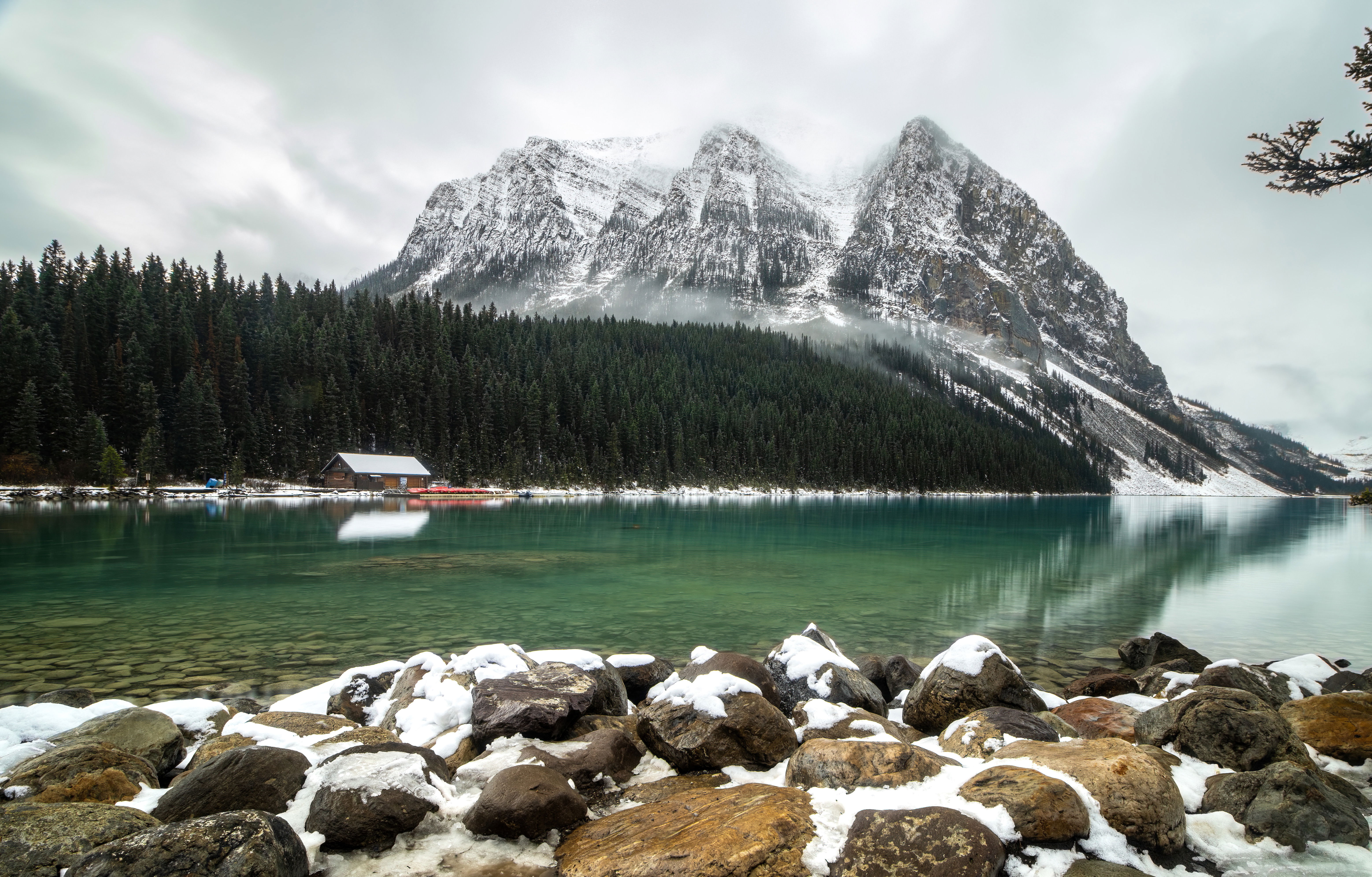 Lake Louise with the first dusting of snow, showcasing a moody landscape.
Lake Louise has many beautiful hikes in the vicinity. One of the most desired by hikers is 'The Big Beehive'. This almost 13km hike is quite tough yet so rewarding. There are a few stops along the way Including Mirror Lake and Lake Agnes.Upon the steep ascent, little gaps in the trees present themself and allow a curious glimpse of Lake Louise becoming more and more turquoise in colour with the elevation.
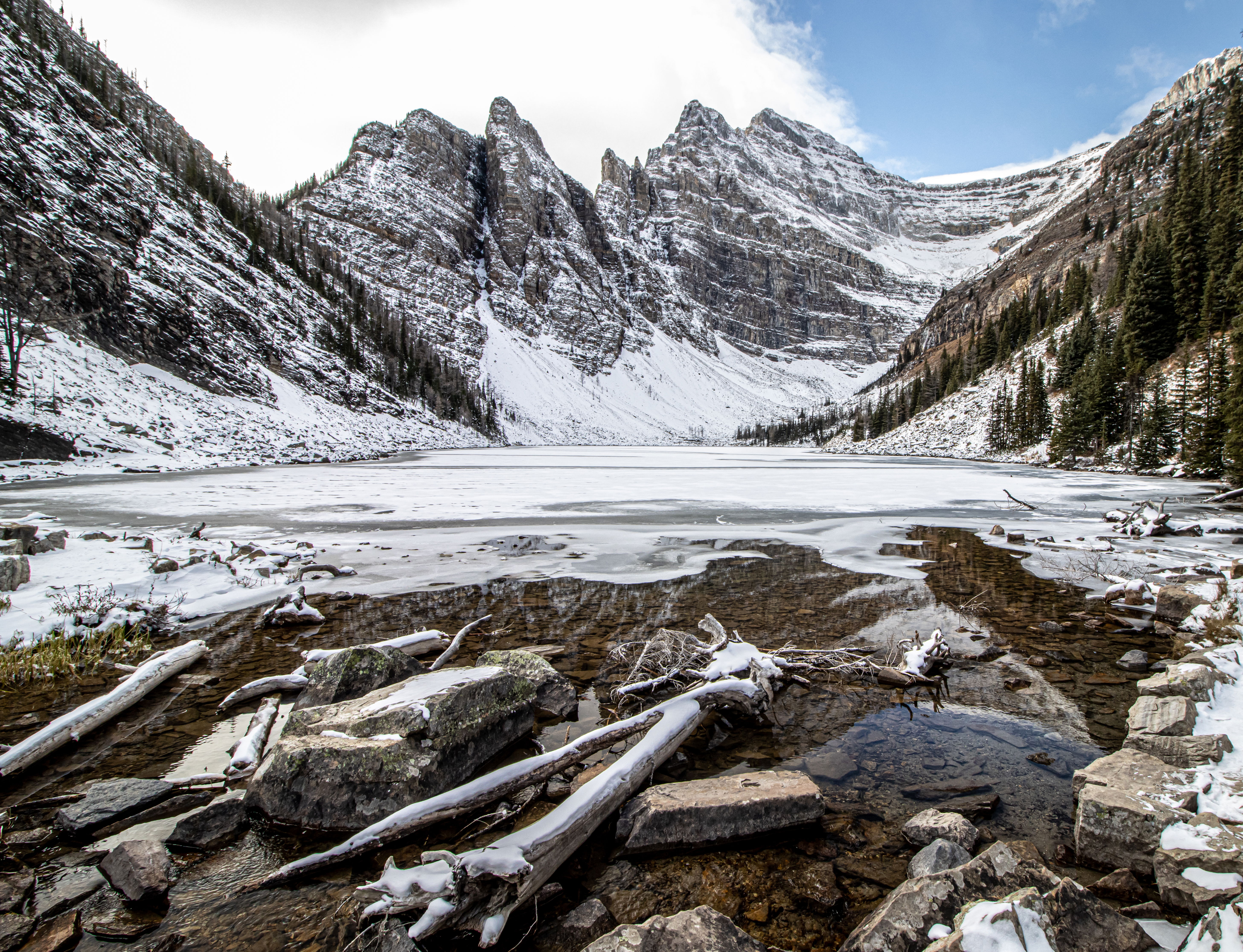 Rugged Lake Agnes, towards the summit of 'The Big Beehive'.
At an altitude of 7005ft, it is possible to stop here for the famous tea house at Lake Agnes while admiring the wonderful views before continuing the strenuous uphill climb to the summit. When reaching the peak an incredible 360° view of Banff surrounds, with the colours of Lake Louise beaming through. It acquire's its colour from the glacial rock flour, which is the sediment produced during glacial erosion. This flour is transported into the lake via meltwater, where it remains suspended and scatters sunlight thus reflecting blue and green wavelengths. During the summer months is the best time to witness this.
The Fairmont hotel stands proudly at the top of the lake while the mountainous landscape carries on for miles.
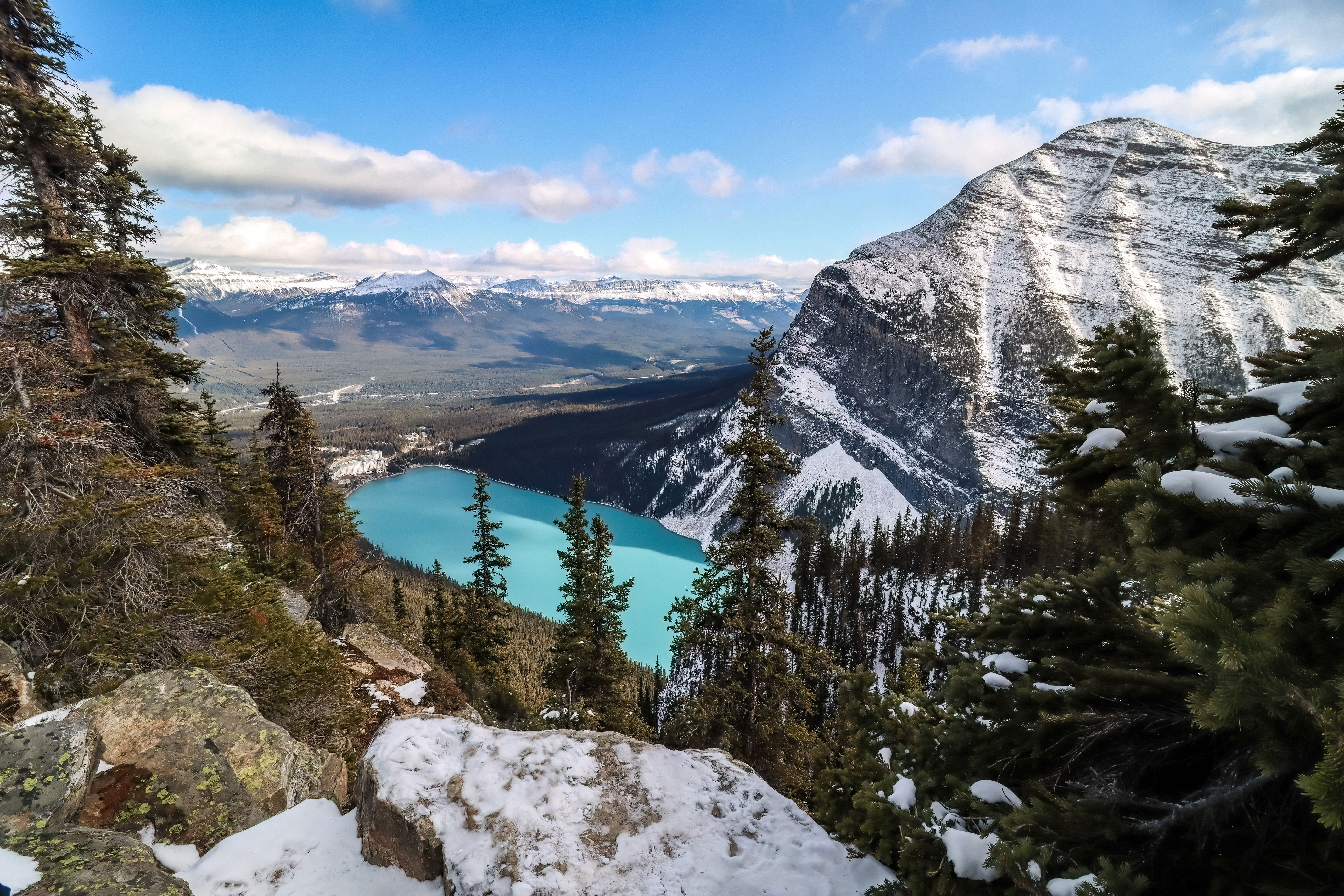 The incredible view of Lake Louise from the summit with the Rocky Mountains in the horizon.
Around the corner from Lake Louise is one of the most photographed lakes in Canada- Moraine Lake. With its turquoise water it is encompassed by the valley of the ten peaks. It's not difficult to see why this view captures so many visitors hearts. With just a short pathed climb, the dramatic view that is pictured in magazines and billboards is right before your eyes. There are lots of Pica that live within this rocky terrain, with a distinctive loud squeak, they are rather easy to spot as they scatter over the rocks.
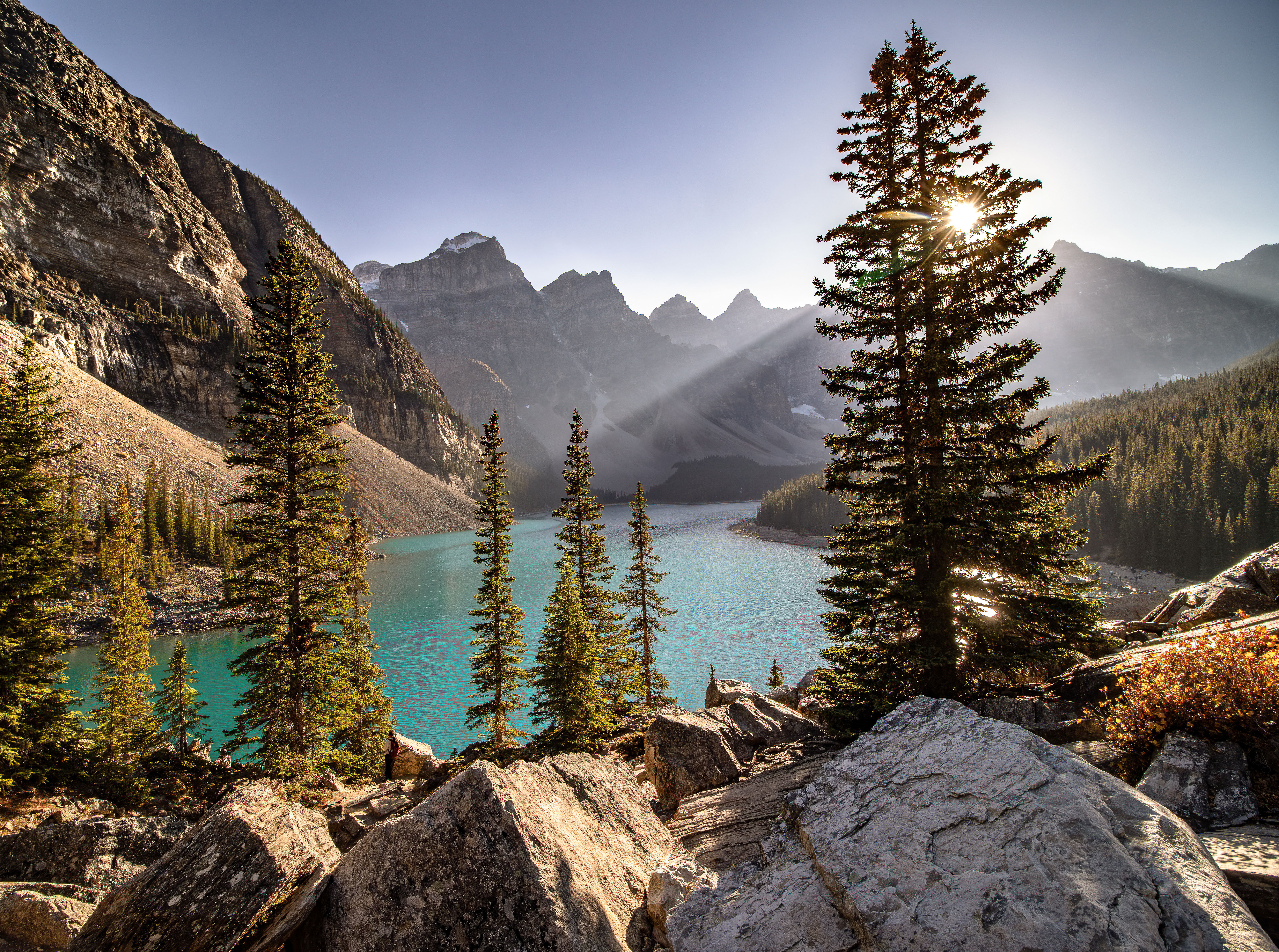 The rugged mountains overlooking Moraine Lake.
I wanted my image to capture the sun rays glowing through the trees while illuminating the rocks, mountains and lake waters, portraying the warmth I felt while soaking up the atmosphere.
Lake Moraine is now accessible only via a shuttle bus, bicycle or on foot since the tourism has spiked causing a concern for the area's protection as the vehicle traffic was overwhelming and uncontrolled. The lake is closed for access from mid October until around May dependant on the weather and avalanche risks. If you are lucky to visit Moraine in the snow season, it's rather amazing!
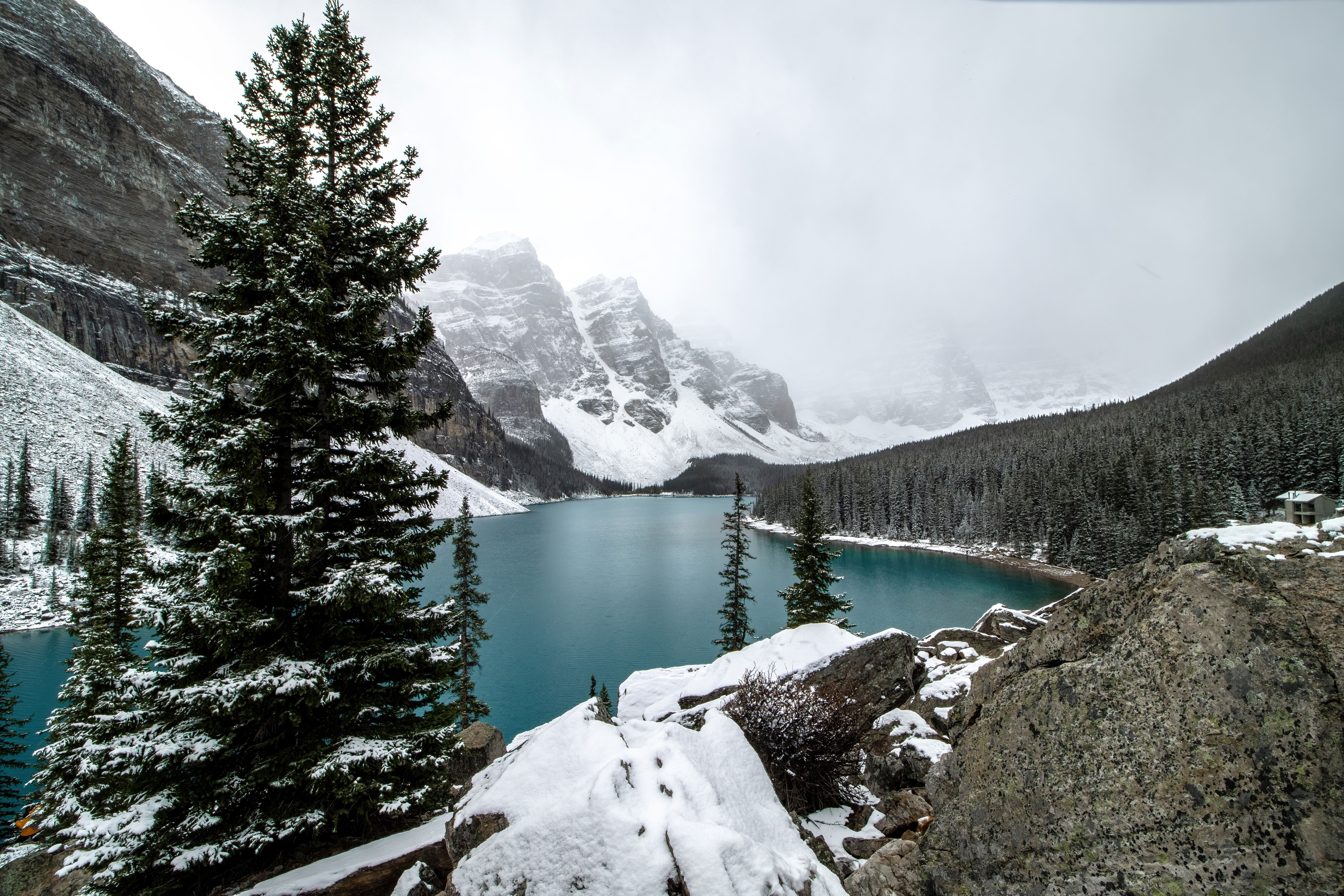 Moraine Lake looking beautiful in the snow.
Not far from Banff Avenue is a circular driving route that has many beautiful lakes such as Lake Minnewanka, Two Jack Lake and Johnston Lake. I frequently visit here, simply as it's so accessible and offers many great hiking routes and beautiful photography opportunities. It's a well known wildlife haven and also great for astrophotography due to minimal light pollution.
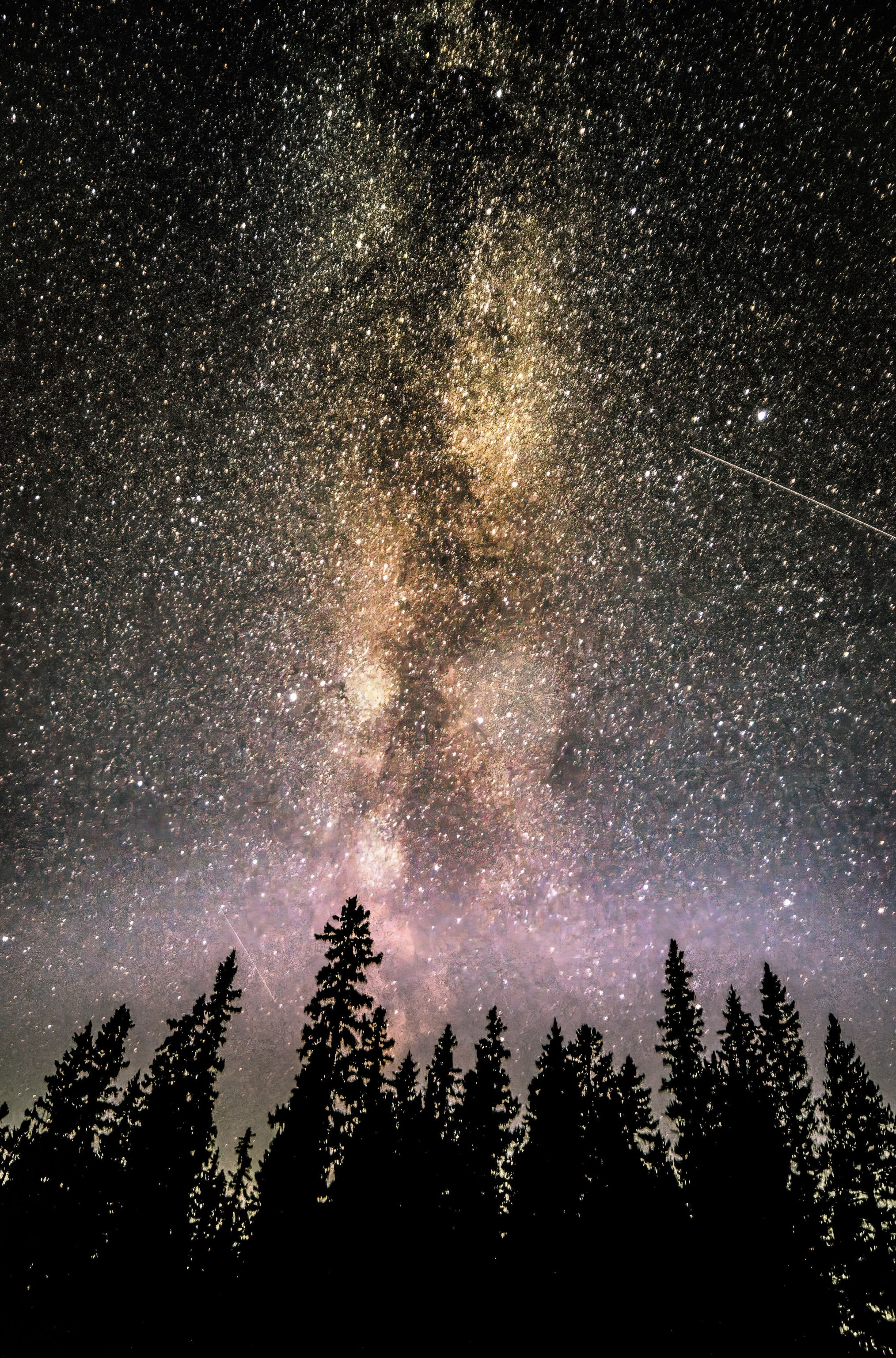 The Milky Way captured by Two Jack Lake, Banff.
One evening, Two Jack Lake was my destination for some astrophotography. I situated myself so the trees worked as a silhouette in my composition, with the Milky Way beaming out above. With luck a shooting star passed over. My senses were on full alert while taking my long exposures as I was in the bold wilderness with nothing but the starlight. It's important to bear in mind what predators could be watchful of me close by, suddenly the forest can feel rather eerie!
I have been blessed with witnessing the aurora borealis in Canada and the displays have been incredible.
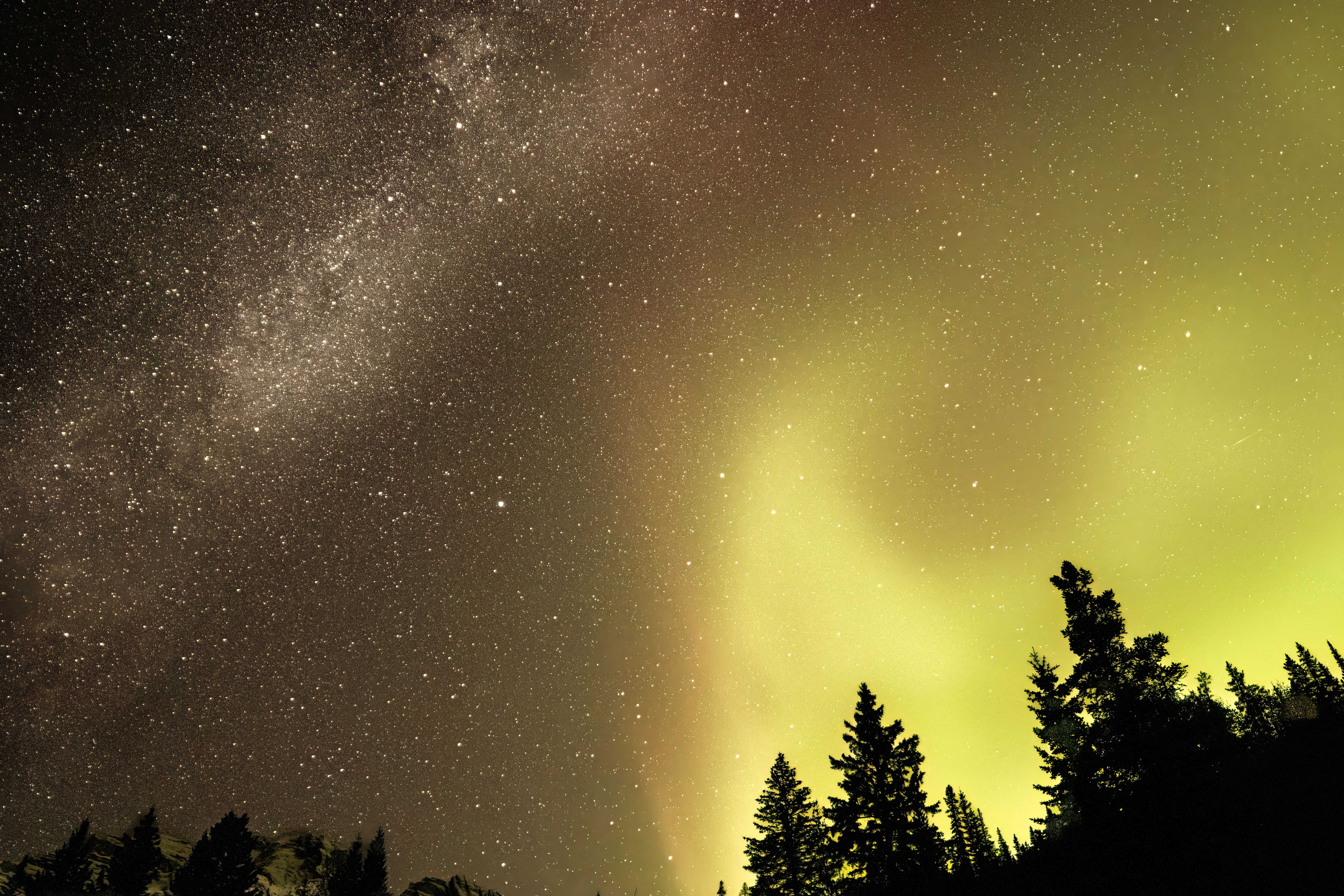 The aurora borealis and Milky Way lighting up the sky at Two Jack Lake, Banff.
Seeing the aurora in person is so amazing, every shot shows an ever-changing movement of the rays. That being said, these areas of beauty have special elements during the daylight. Johnson Lake has an underlying elegance, with emerald waters and tree stumps, concealed under the water.
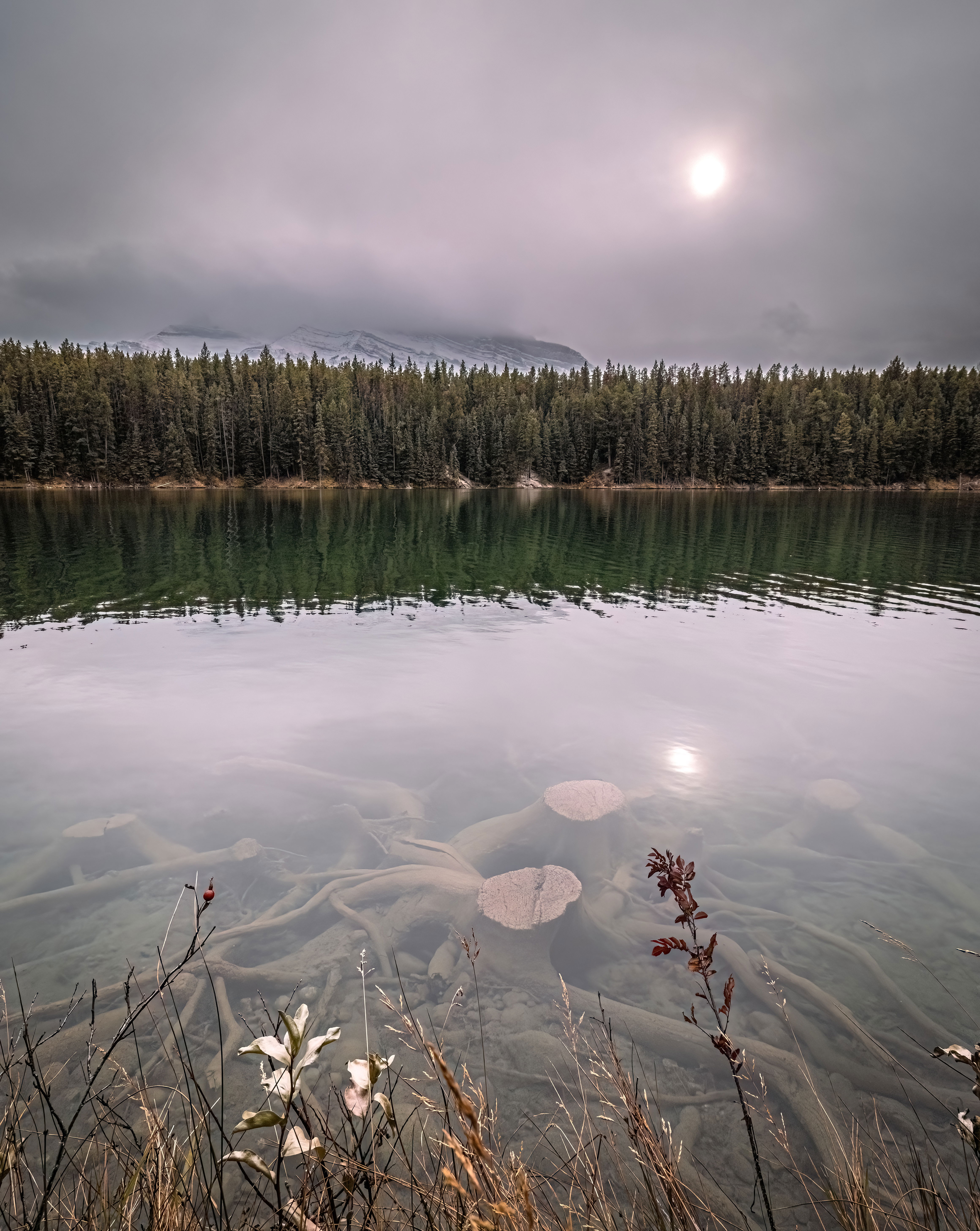 Underwater tree stumps and roots at Johnston Lake, Banff.
Wildlife frequent the area, predominantly at dusk and dawn yet quieter seasons provide more daytime opportunities on isolated hiking routes. I was hiking by Johnston lake when I encountered a gang of Elk. These are the second largest of the deer family and are to be respected, especially in rutting season. The bulls can be particularly aggressive and capable of tremendous damage. When near these mammals it's important to remain vigilant and keep your distance. They remained curious of me, but carried on eating and showed no signs of threat.
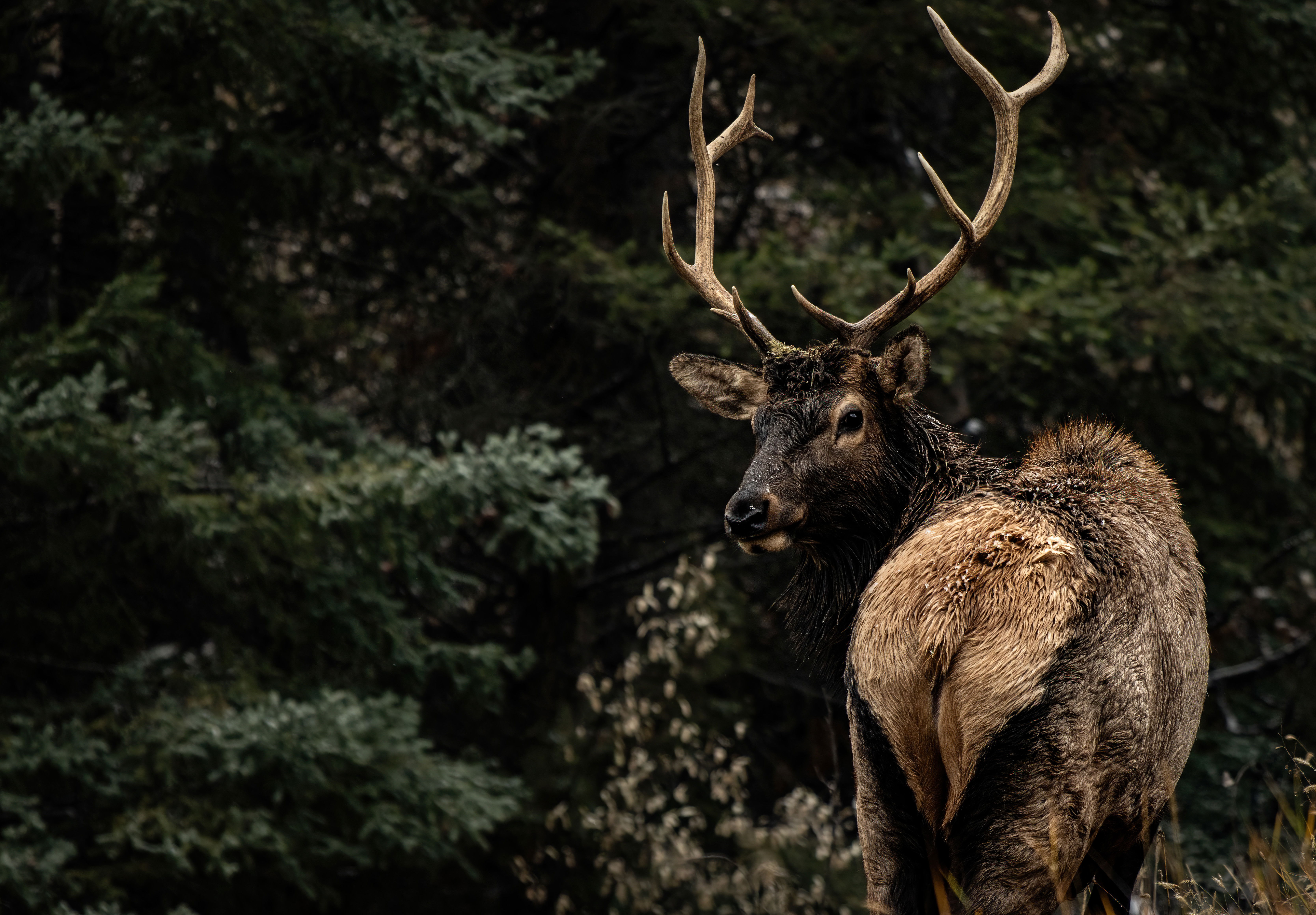 A beautiful bull Elk in the forests of Banff.
Another area of Banff that people frequent to catch a glimpse of wildlife is the Bow Valley Parkway. I witnessed a snowshoe hare while driving, sprinting down the side of the road. Slowing down to catch a look, shortly later a small mammal ( either a pacific marten or mink) was on its tail end, eagerly attempting to catch itself a winter meal. It happened so quickly I couldn't decipher what species it was or safely stop and get my camera out, nevertheless it was a great experience.
 A Mule deer feasting on winters flora on the Bow Valley Parkway, Banff.
In other instances, luck can strike twice in one short drive. I'd not long entered the Bow Valley drive and immediately came across some Mule deer, which made for a great shot with the snowy background. Shortly after capturing this, I turned down into a lay bye to stop and finish some breakfast, when a Red Squirrel jumped out onto a branch as I watched in awe. I'd always longed for a shot of one in the snow.
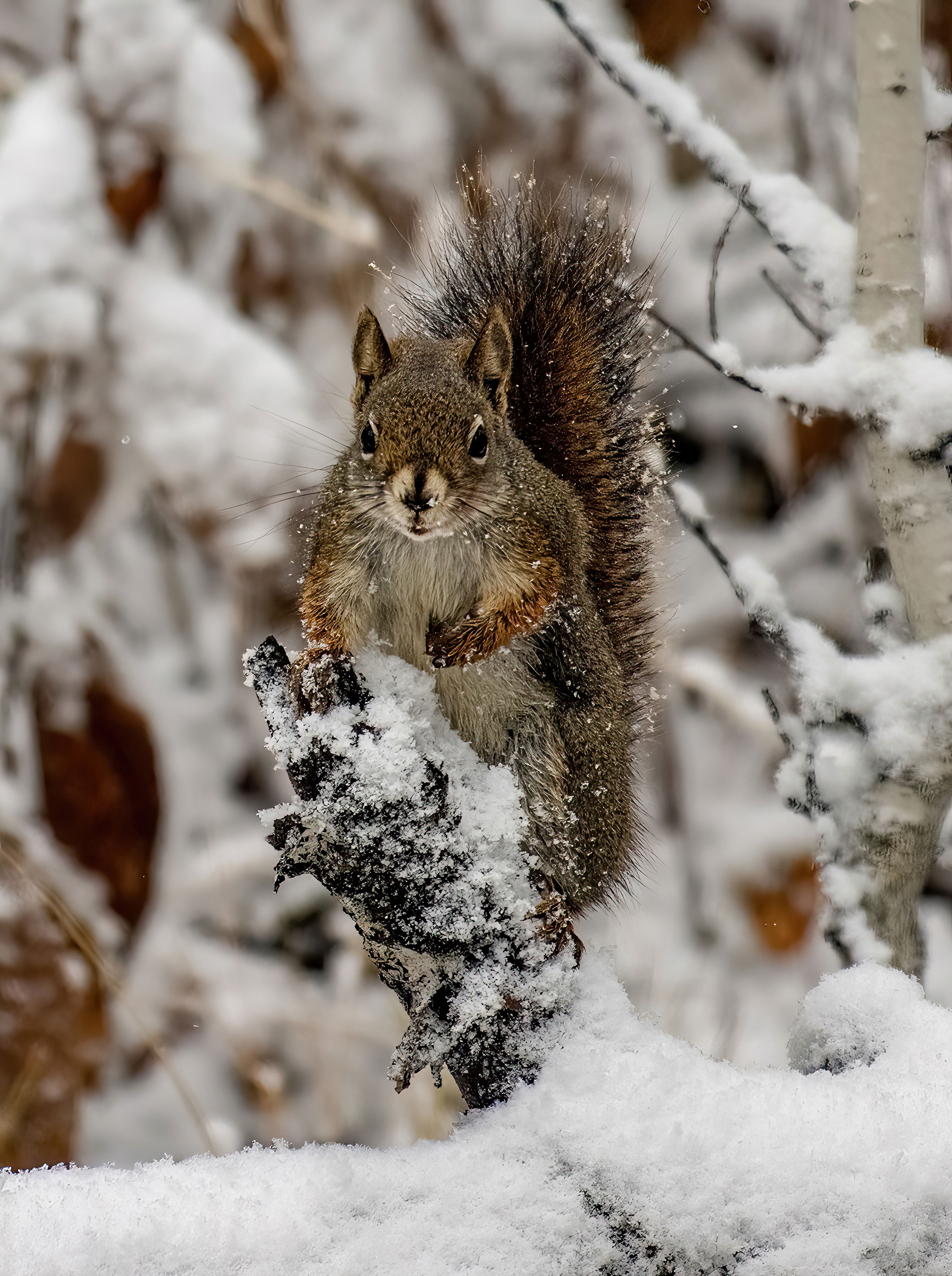 A Red squirrel, posing on the snow covered tree.
Canada really comes alive when the snow hits, and truly brings out the best in the surrounding landscape and personally when the Rocky Mountains look the most striking. The winding road through the parkway has some amazing viewpoints, and certainly should not be driven down just for the wildlife.
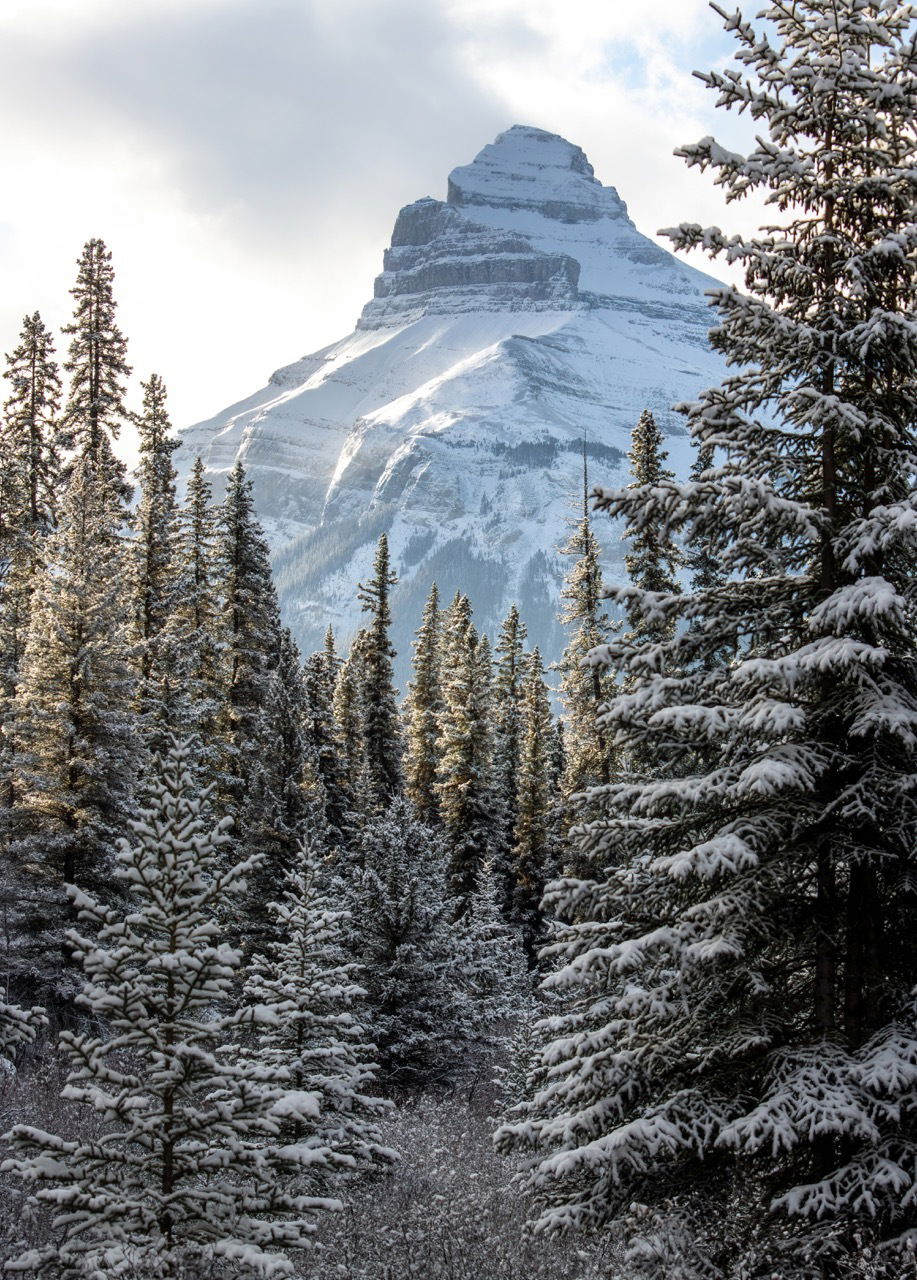 The Bow Valley Parkway's glorious landscape.
Following on from the Bow Valley Parkway, a must do is the Icefields Parkway from Banff all the way to Jasper National Park. It is considered one of the most beautiful highways in the world, with an abundance of wildlife and dramatic landscape along the route. Highway 93 starts at Lake Louise and ends in Jasper town with a distance of 288km. A good proportion of my photography in Alberta is captured along this route. The drive would take around 3.5hours if driving with no stops, but it is impossible not to.
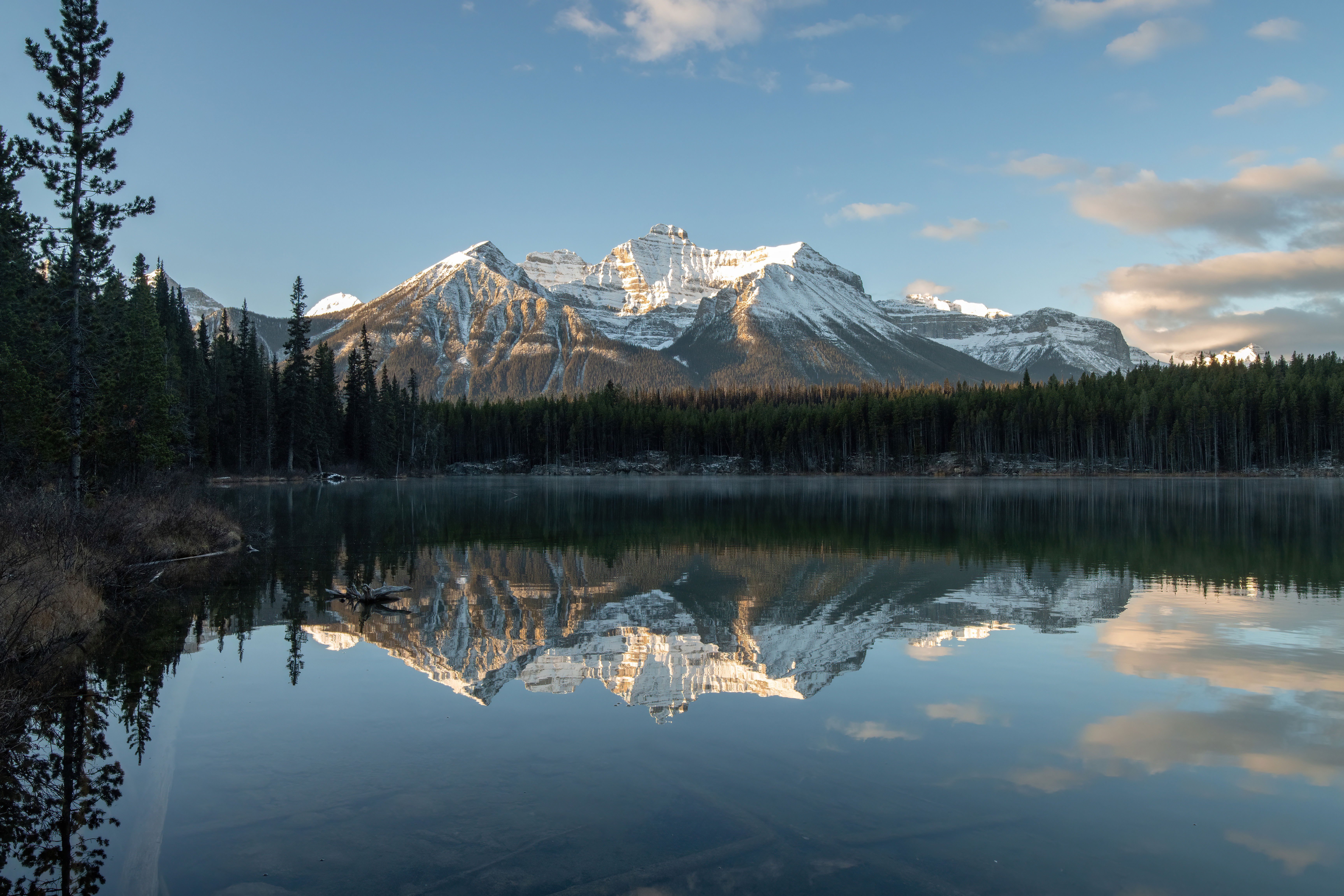 Herbert Lake glowing in the morning sun.
The first breathtaking stop is Herbert Lake. This lake isn't far from Lake Louise and in the right light is actually Emerald in colour. I captured this shot in the morning before the sun was high enough to showcase the colour but I had some mist upon the lake which was really effective for this image along with the still water.
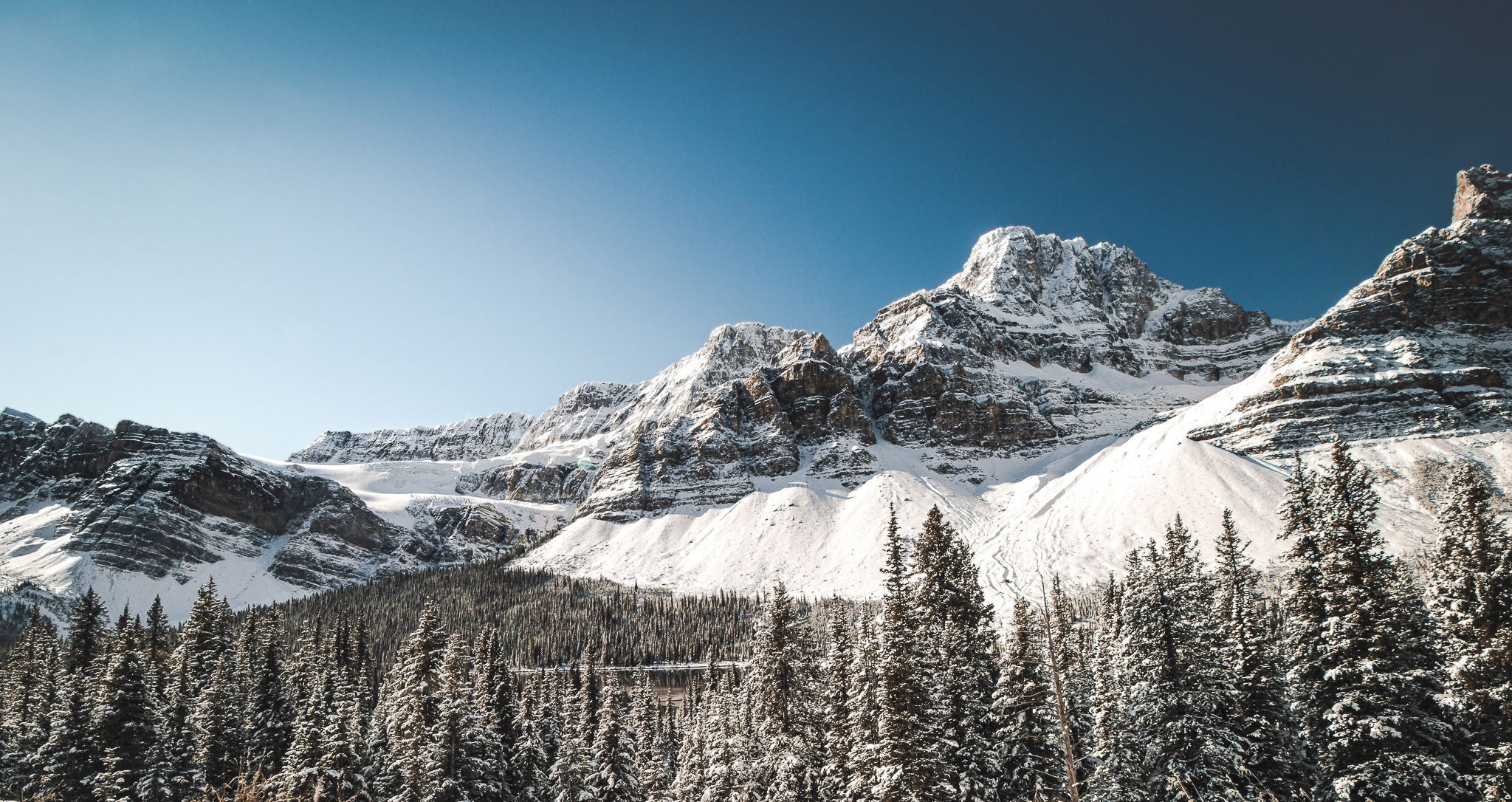 Crowfoot Glacier covered in snow.
The next jaw-dropping stop is Crowfoot Glacier. It overlooks Bow Lake, which the glacier feeds into and progresses into the Bow River that flows all the way into Calgary from Banff. The landscape is extraordinary and I always get my camera out for this view.
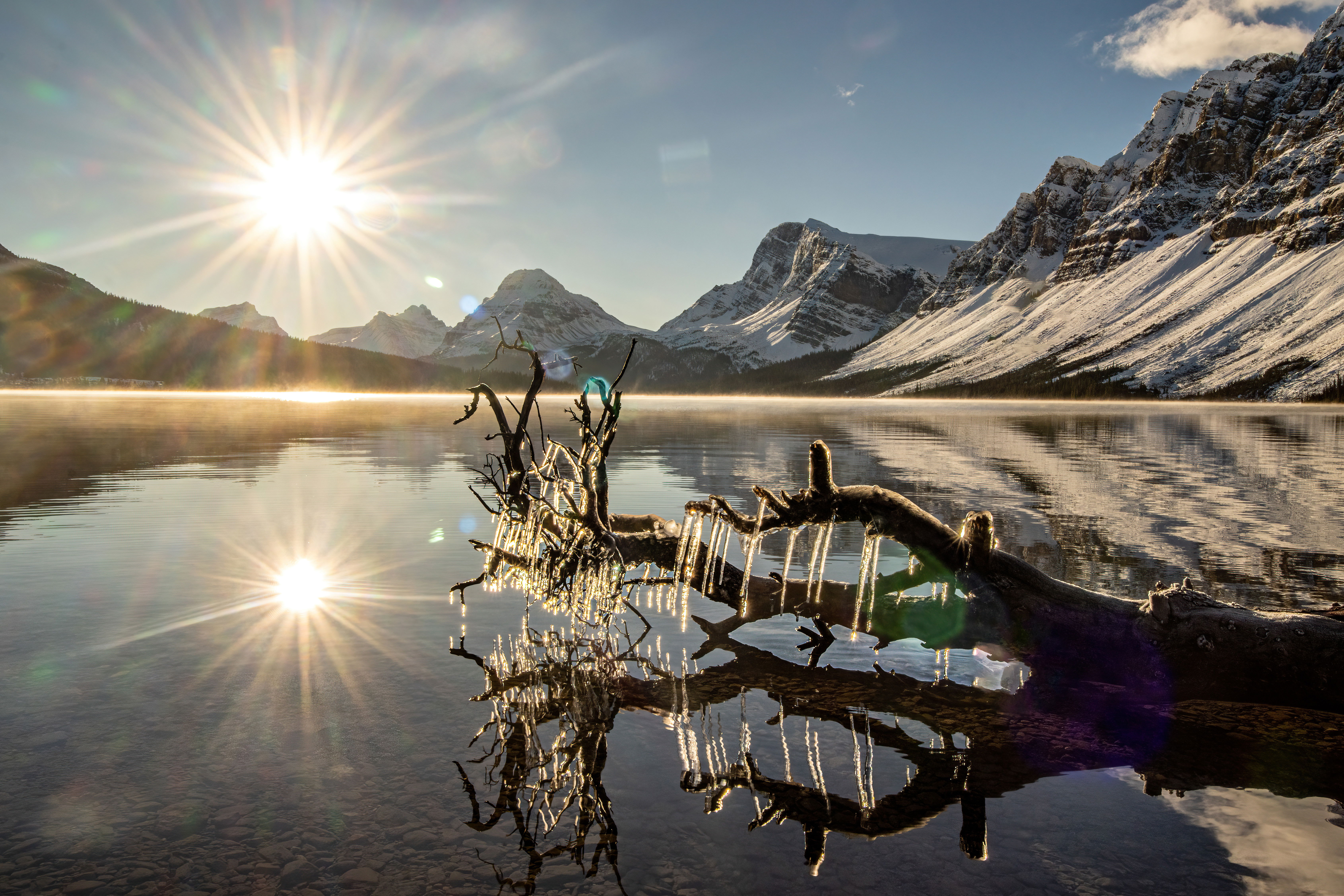 Bow Lake under the sunrise.
From this angle, Bow Lake is in its full glory. This shot is one of my favourite pieces I've captured. The mist was slowly dispersing from the lakes surfaces as the icicles glowed as they clung onto the brach. The lighting was flawless and really highlighted the mountains in the distance. This viewpoint is always more peaceful as it's off the main highway down a little track road and not easily visible thus easier to get a good composition without the competition from other photographers and tourists.
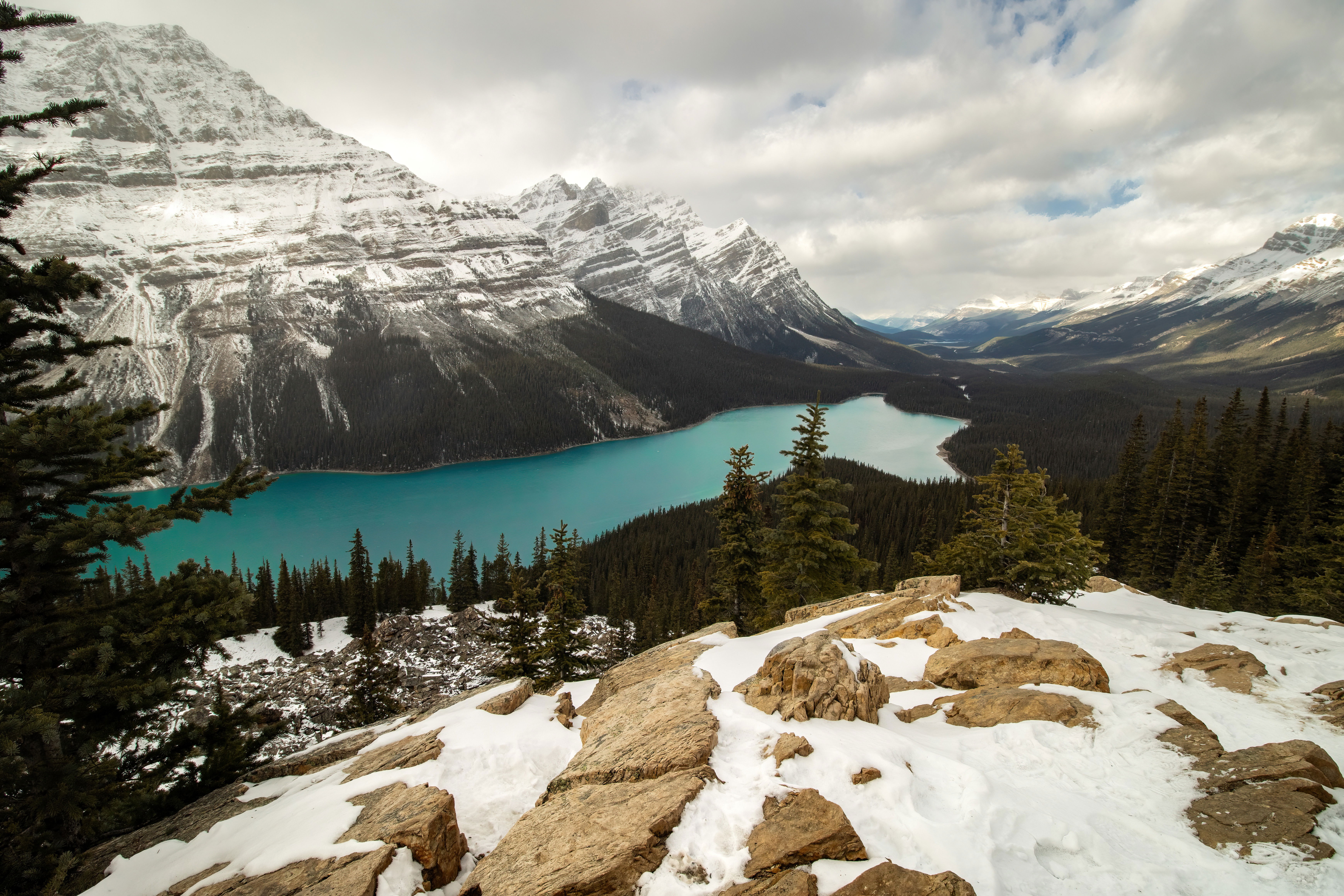
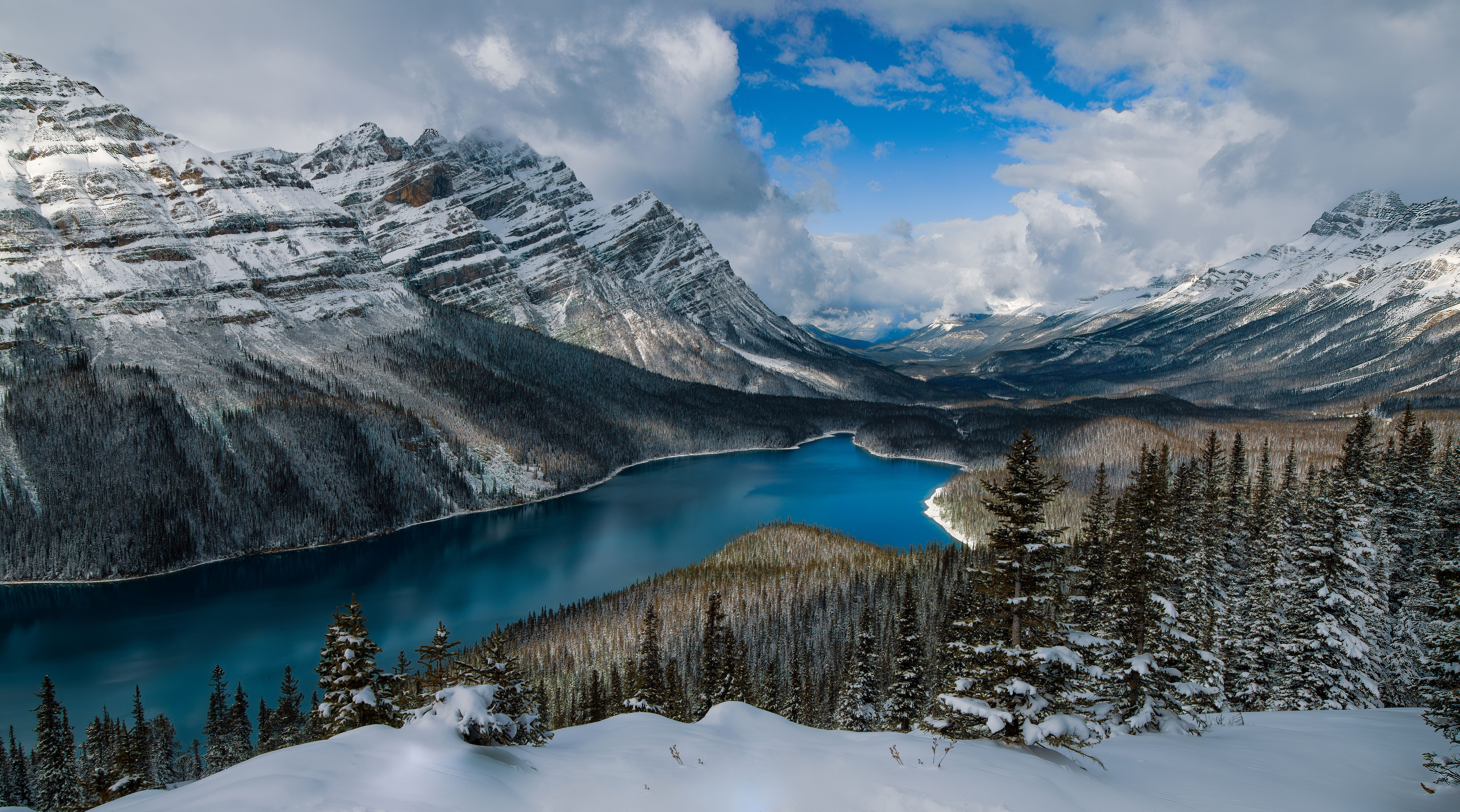 Lake Peyto In two contrasting scenes, emitting different colours of the lake.
Lake Peyto, in reach with just a short uphill hike to the viewing platform, is a notoriously popular lake. The landscape is one of a kind, with the bright lake differing in colour depending on the cloud and weather, as seen in both captures above. More frequently observed with the bright turqiouse aspects it is famed for but it can also appear more 'glassy' and blue. The snow makes this lake really pop and adds to the atmosphere of the surrounding mountains. The shape of the lake is referred to frequently as a wolf which can be made out in my images with the head at the top.
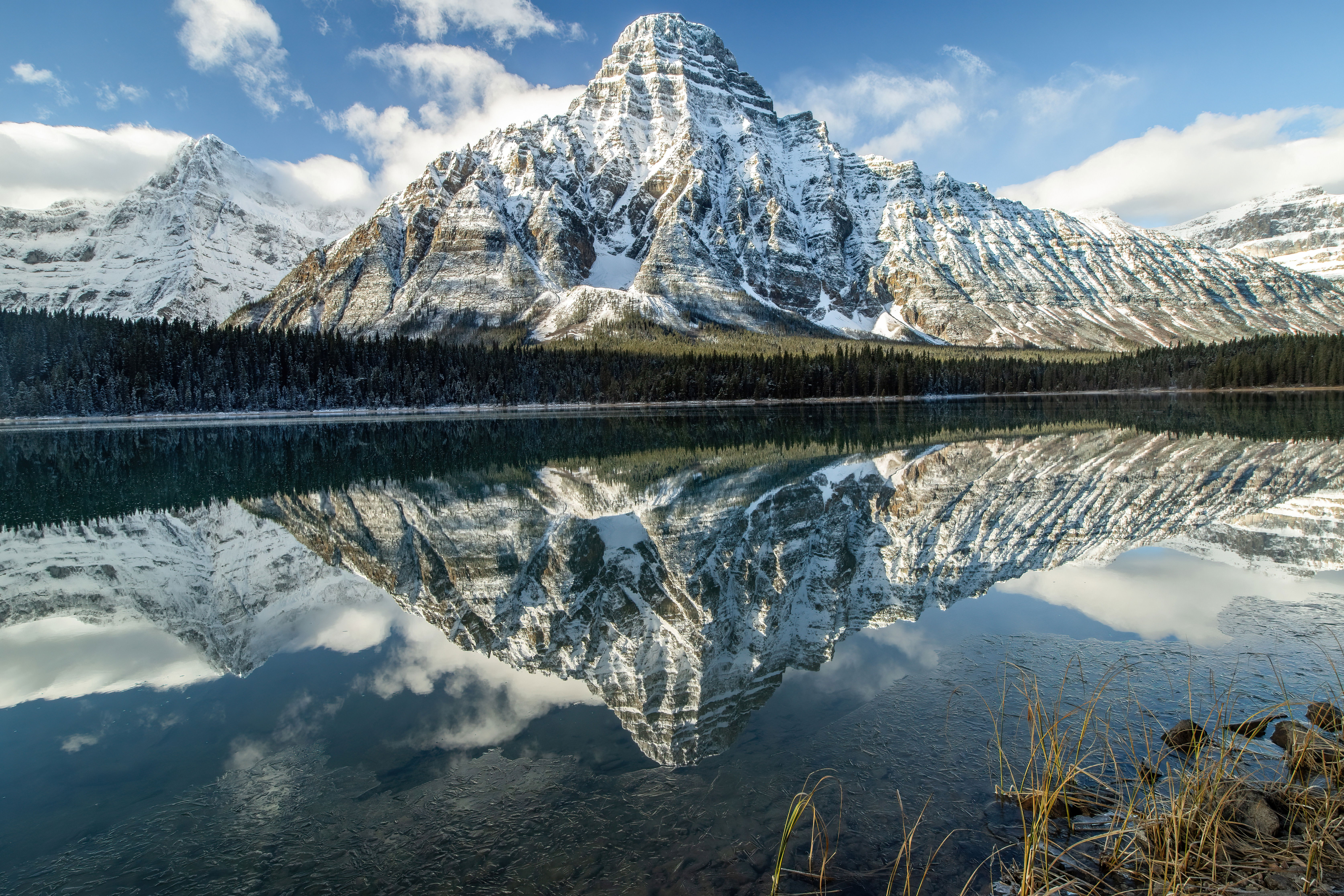 Waterfowl Lake reflecting Mount Chephren.
Waterfowl Lake is located in the Mistaya River Valley area and in the right conditions the wonderful Mount Chephren can be seen as a mirror image in its still waters. I captured this in the morning, and noted on the route back the water was rippling in the wind and much cloudier skies meaning this shot wouldn't have been possible had a waited until the return journey.
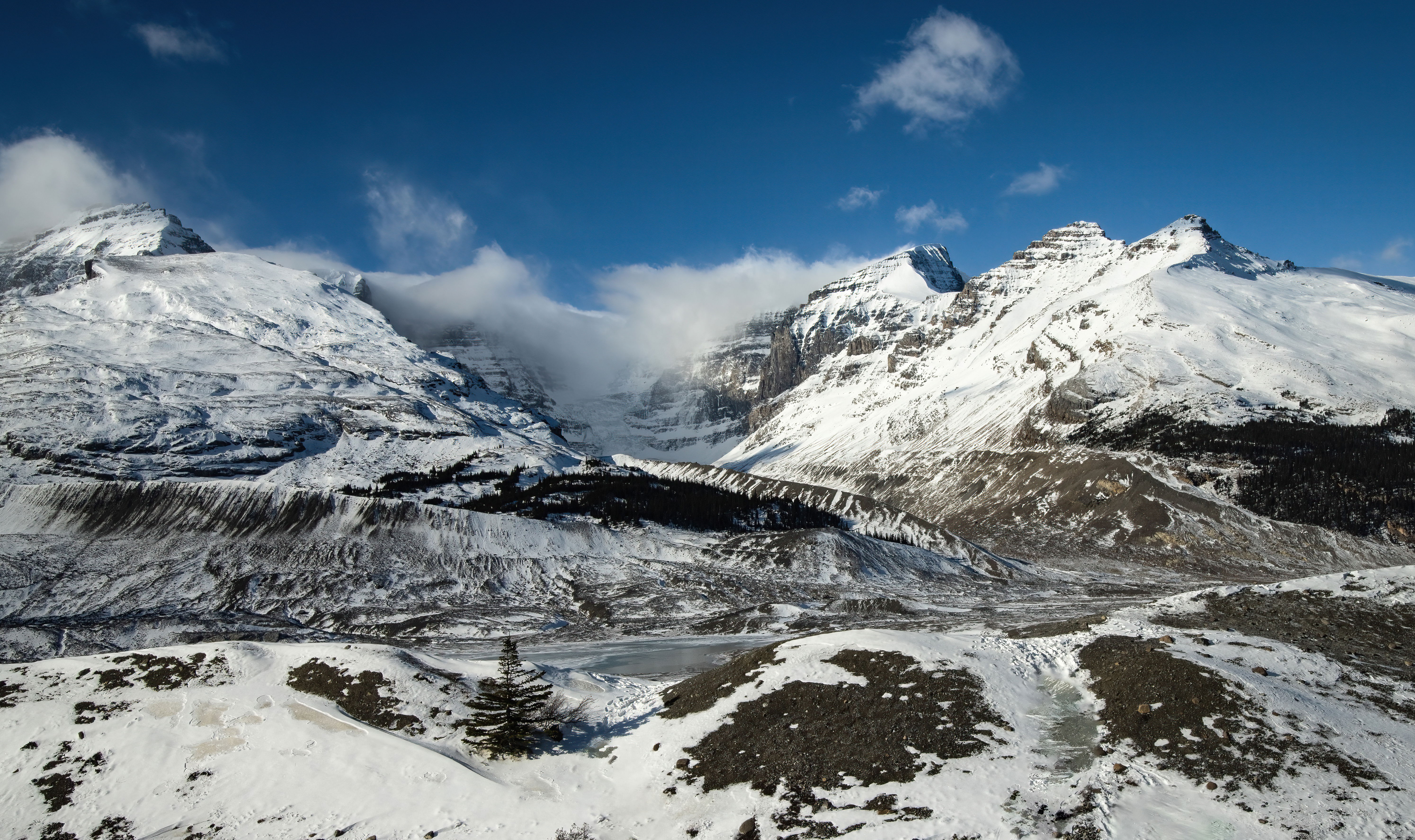 The Columbia Icefield under blue skies.
The Columbia Icefield is home to the Athabasca Glacier. This icefield is one ion the largest non-polar ice fields in the world. This vast wilderness is one of the most popular tourist attractions along the icefields parkway. An ice explorer bus takes you right to the glacier itself. Its notoriously cloudy and extremely windy so this blue sky shot was a rarity and an opportunity not to be missed.
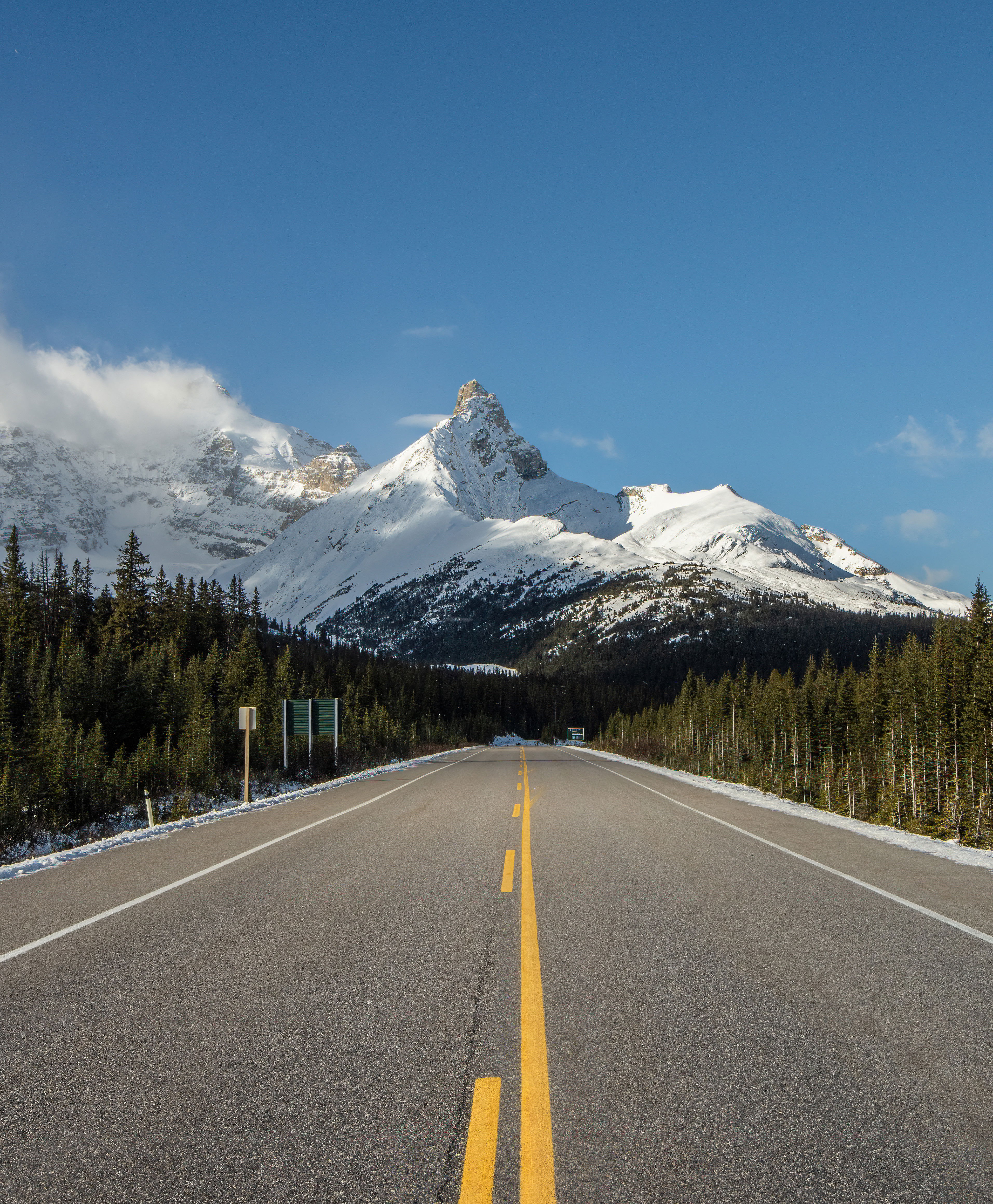 Driving the Icefields parkway, admiring the amazing landscape.
Driving the Icefields parkway means eye-catching views like the image above, with mountains at every turn and wildlife along the way. It's easy to see bighorn sheep along here and mountain Goats - which are one of my favourites. Although they are called 'goats' they are actually antelope. They are always at higher elevations and difficult to spot, but if you keep your eyes peeled along this route for little white specks on the mountains rocky surface, you won't be disappointed.
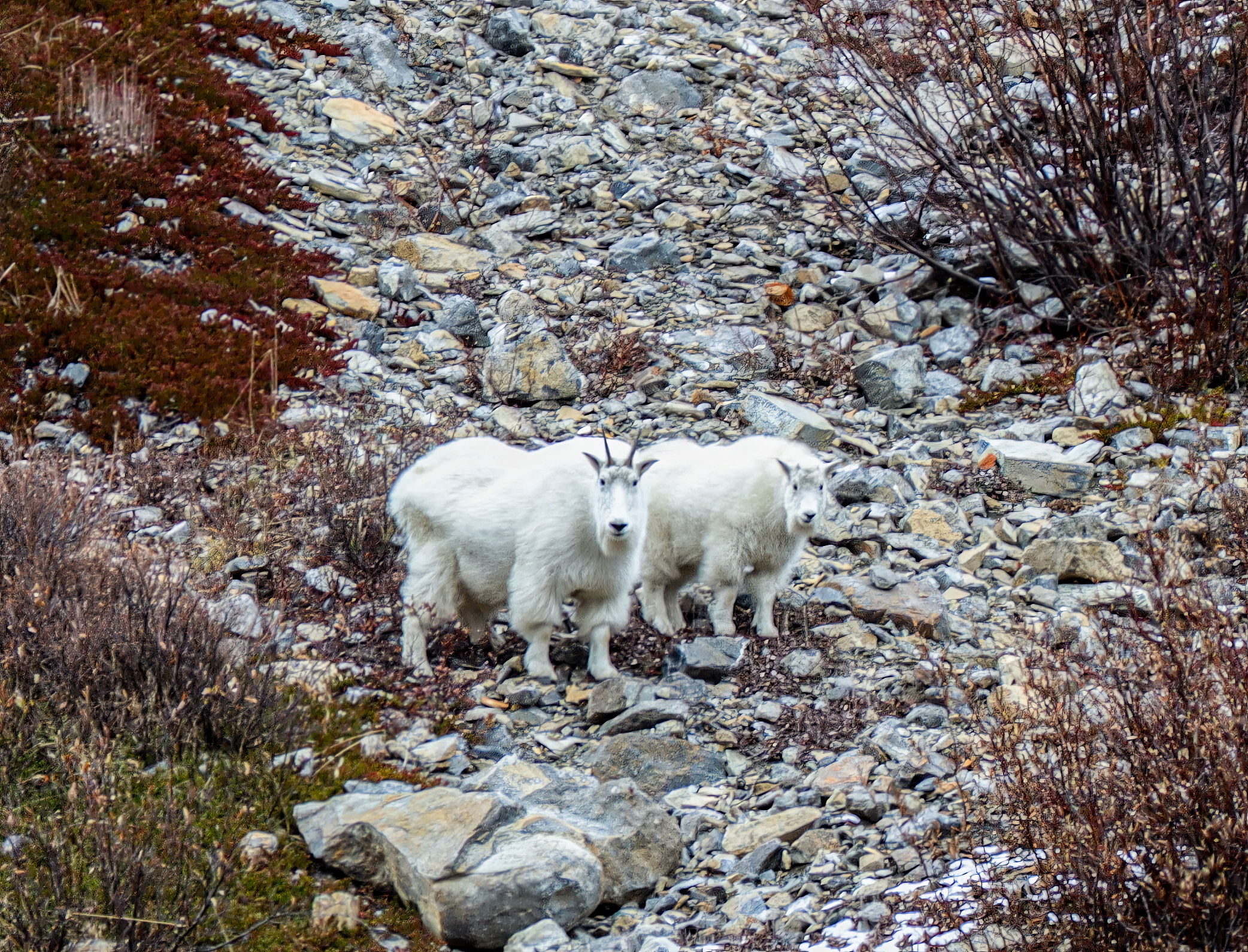 Two mountain goats on the Icefields Parkway.
Heading into Jasper you can't miss out Maligne Lake. Heading down Maligne Lake road is a possible opportunity to come across the local moose population. I've observed this particular group twice in this area and they are well know for trotting up this road and licking salt off cars from the roads that have been gritted (this happened to us). In the image below is a moose licking the salt off my vehicle. I slowly managed to drive away without causing the moose any sort of fright or stress.
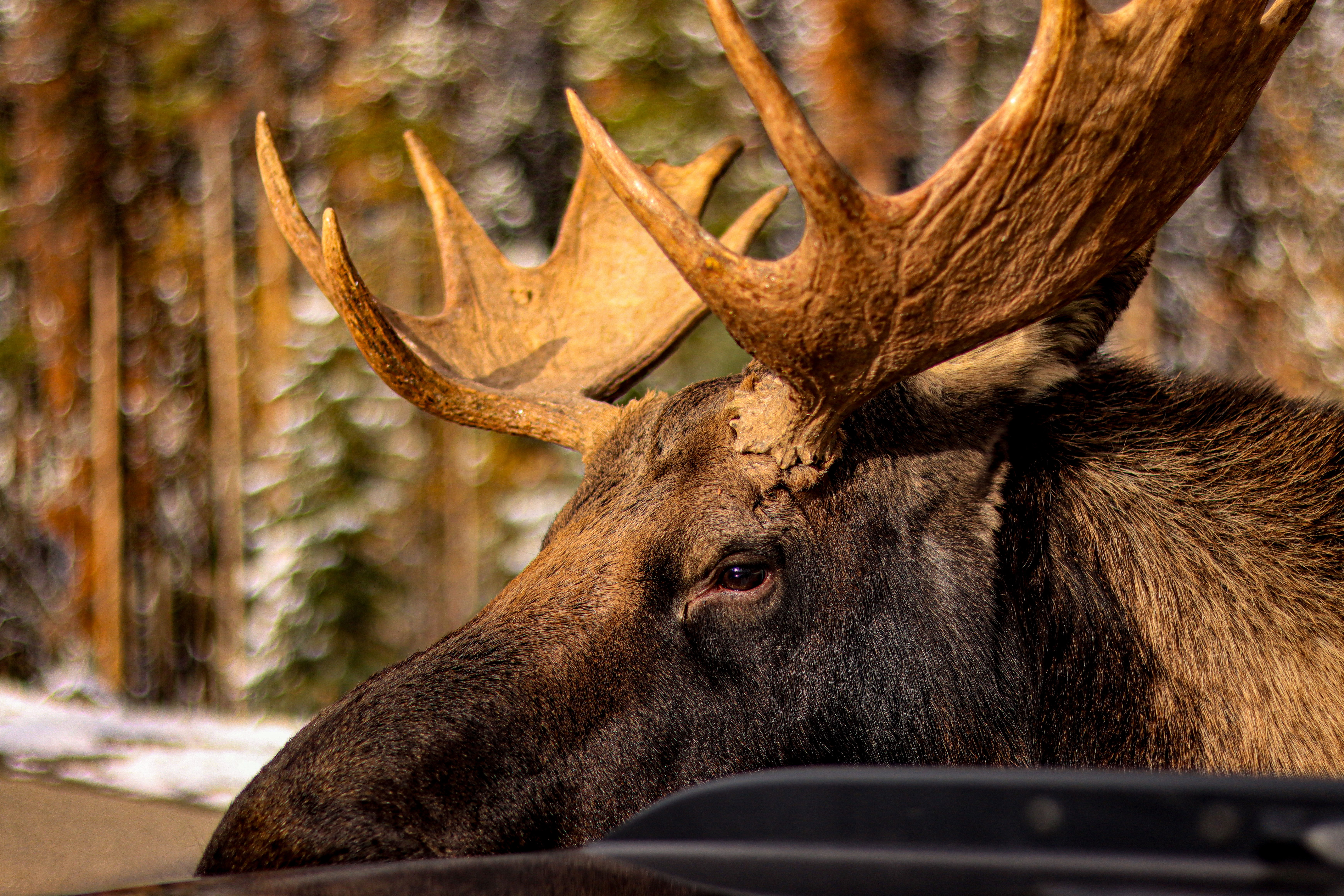 A bull moose licking salt off the back of my vehicle.
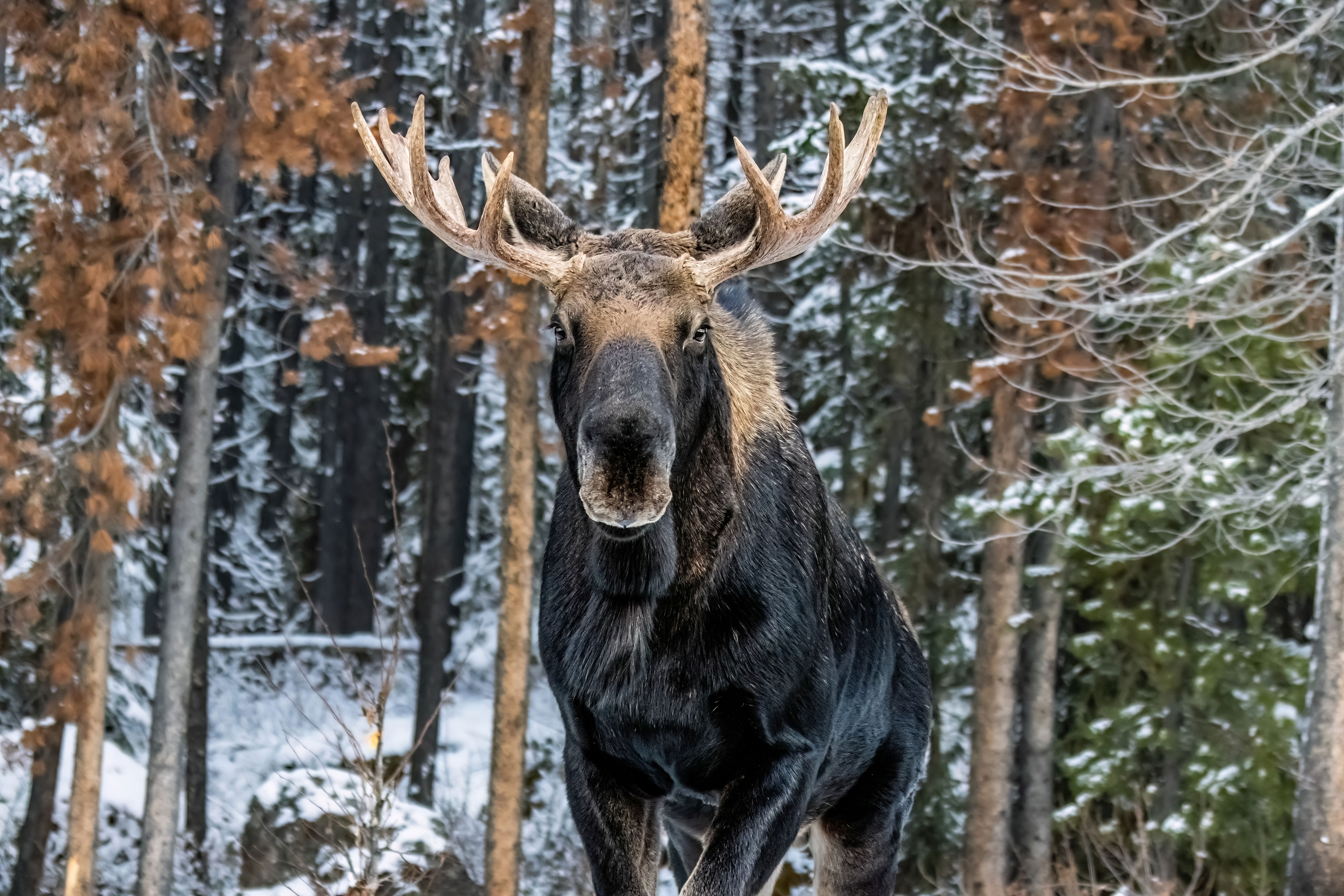 Standing tall amongst the forest that lines Malinge Lake road.
Maligne Lake is the largest natural lake within the Canadian Rockies. Surrounded by mountains and lodgepole pines, Spirit Island resides in the centre which is one of the more famed areas of this lake. You can canoe here in the summer and catch a ferry round the large lake that spans out 22km. There are also a variety of hikes such as the Skyline Trail which is a multi-day 44km route all the way from the lake to the town of Jasper or if you're wanting shorted day loop hikes theres Opal and Bald Hills.
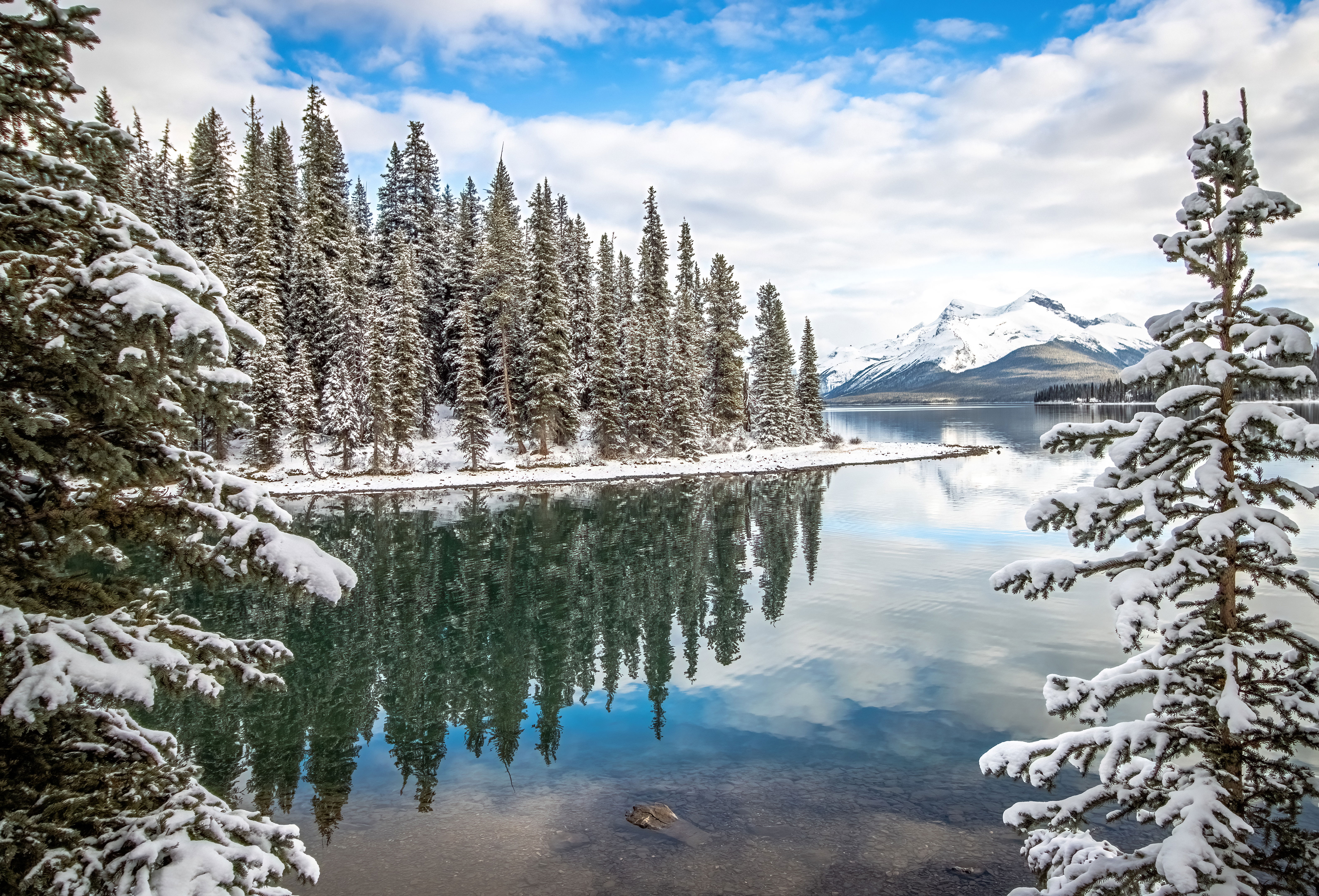 Maligne Lake drenched in snow.
Simply just hiking around the lake could even be enough to satisfy your nature needs, especially In the snow. There are some of the famous red chairs that look out to spectacular lake views. At the start of the lake trail there's a cabin on the lake that looks very picturesque. I took a long exposure of this lake to highlight the serenity and peace felt stood there admiring the scenery.
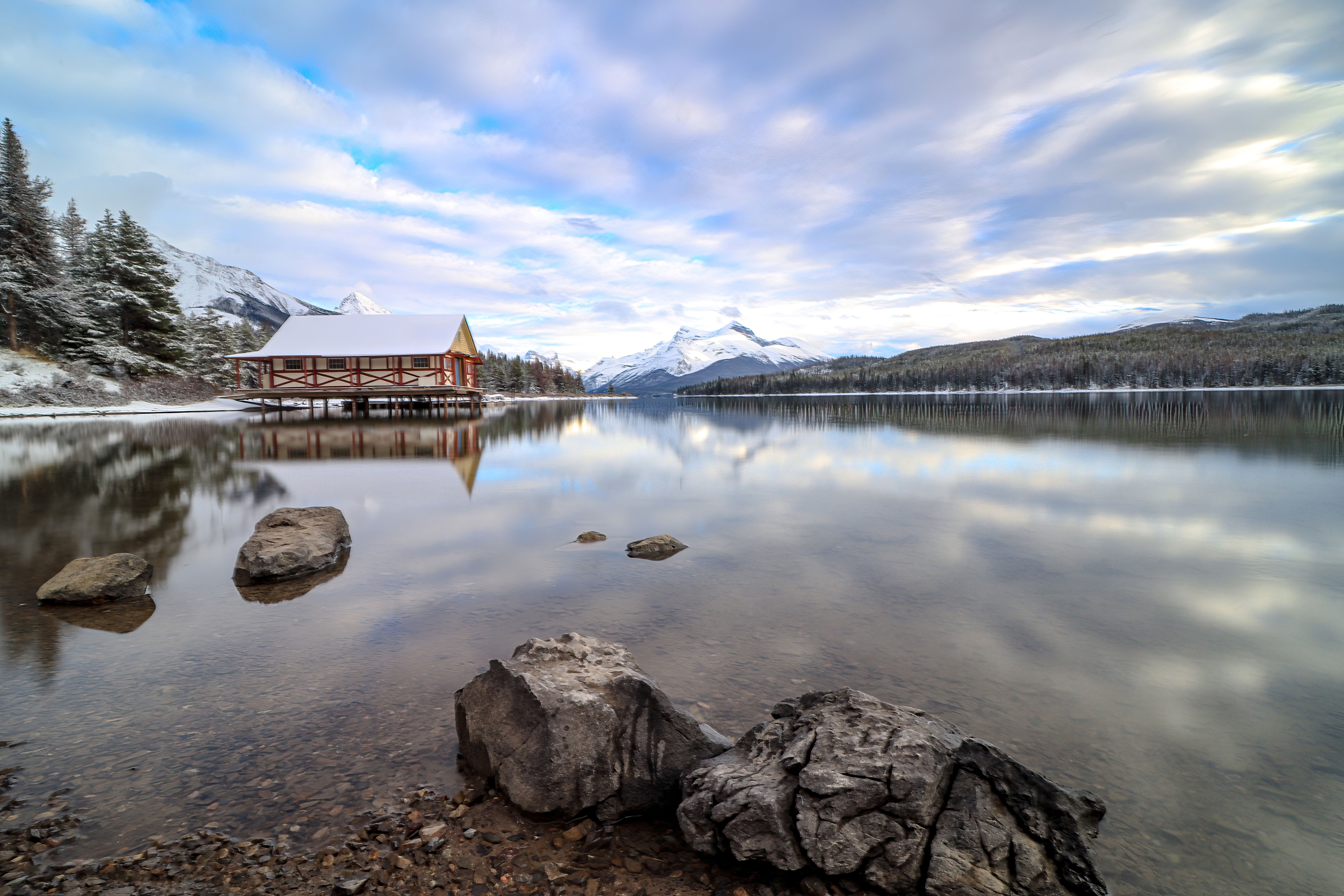 Maligne Lake cabin.
Traveling and photographing these picturesque places in Alberta gives me so much inner peace and pure happiness. Sharing my work and enabling others to see these astonishing places will hopefully convey some of these emotions.
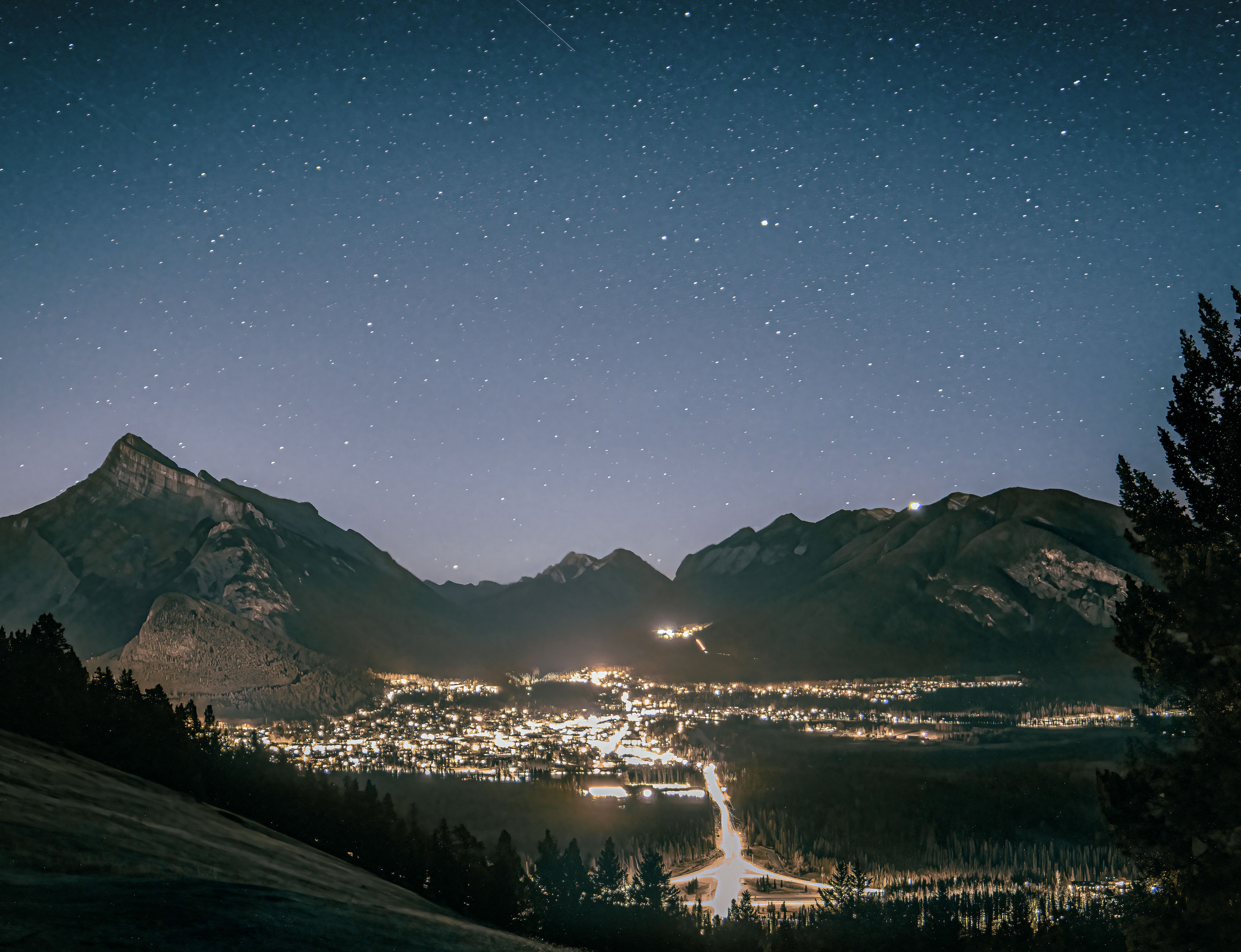 The mountain town of Banff lit up under a canopy of stars.
I will shortly be releasing part 2 of this blog; British Columbia, which will explore the wonders of Glacier National Park to Vancouver.
Chloe Neilson.